The best pulse TIG welders
Pulse is the control that lets you put a hot arc on thin material without melting it. The machines differ enormously in how much of that control they actually hand you - and in whether the pulse works on aluminum at all.
Arc & Bead is an Amazon Associate. If you buy through a link on this page we may earn a commission, at no extra cost to you. We have not physically tested the machines on this page and we say so on How We Pick.
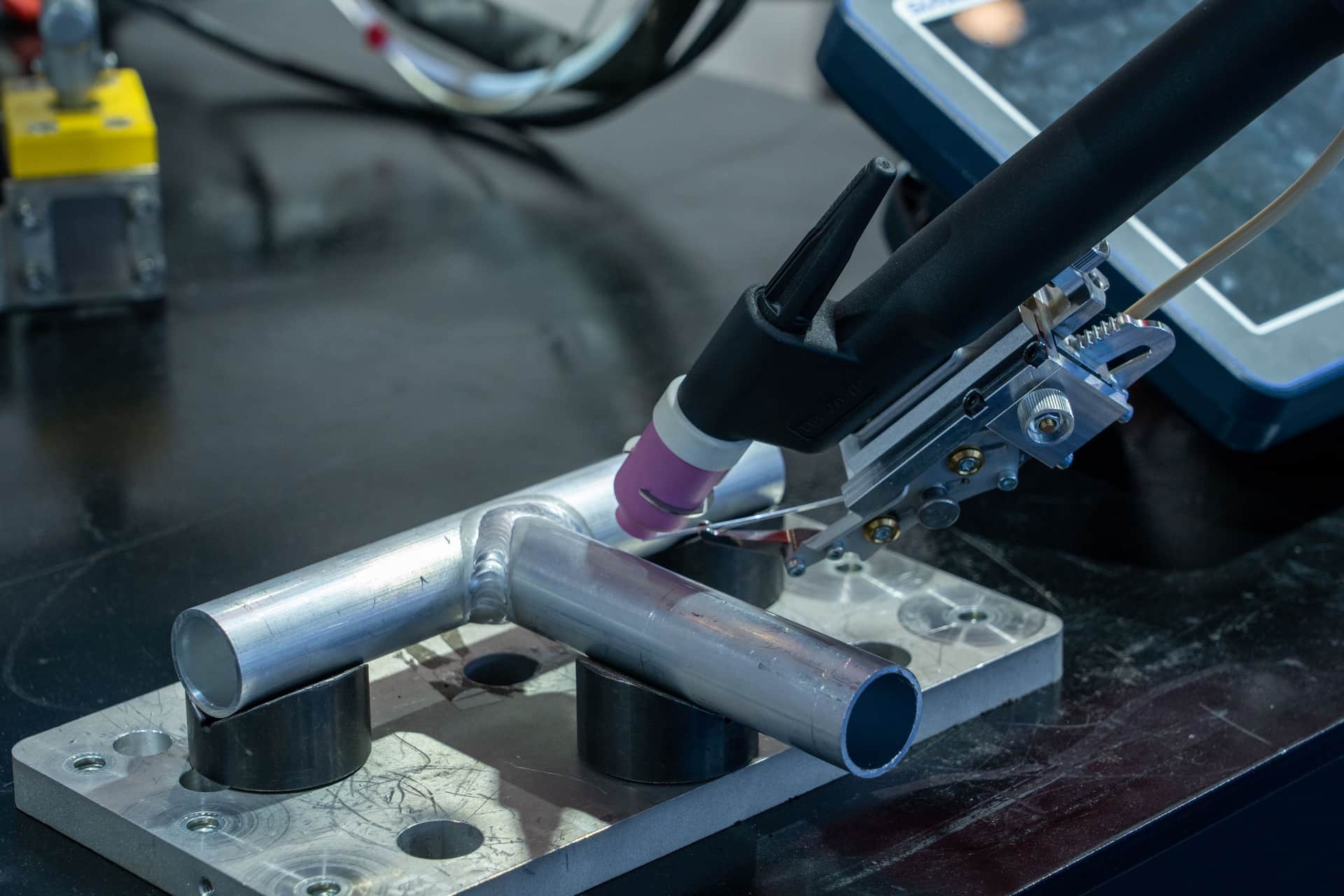
Quick picks
Tap any row to jump to the full write-up further down this page.
| # | Product | Best for | Price |
|---|---|---|---|
| 1 | 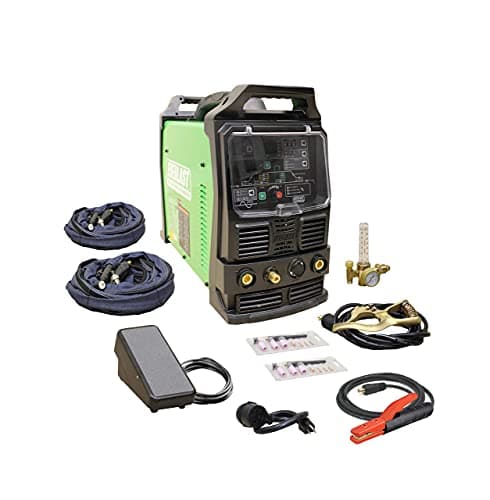 Everlast PowerTIG 210EXT0.1-500 Hz DC and 0.1-250 Hz AC square pulse, with nine stored programs - the deepest published pulse control here by a wide margin. | Best overall | |
| 2 | 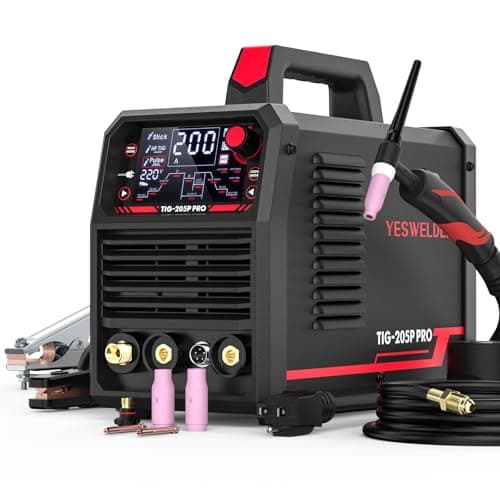 YESWELDER TIG-205PPulse TIG on steel and stainless for the least money in our registry, at 10.7 lb - but DC only, so it does nothing for aluminum. | Budget pick | |
| 3 | 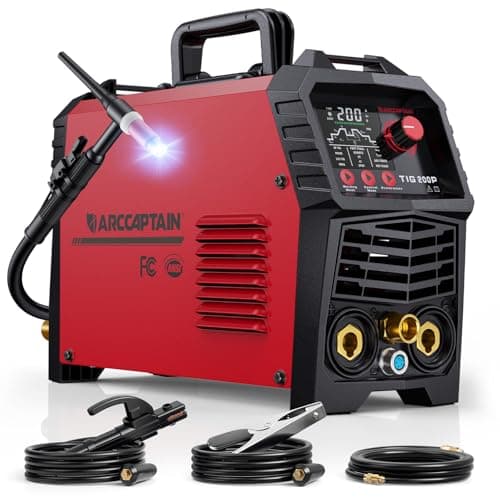 ARCCAPTAIN TIG200PHF TIG, lift TIG, pulse TIG, spot TIG and stick in an 11.8 lb box with a published 60% duty cycle. | Best value HF-start pulse | $249.99 · View on Amazon #ad How this is funded · Price as of November 28, 2026 |
| 4 | 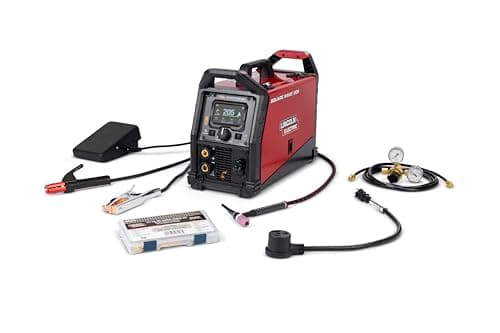 Lincoln Electric Square Wave 205Pulse 0.1-500 Hz with AC frequency and AC balance, from the one brand here with a welding-supply counter behind it. | Best dealer-supported pulse machine | $1,598.99 · View on Amazon #ad How this is funded · Price as of November 28, 2026 |
The short answer
Pulse TIG switches the current between a high peak and a low background many times a second. The peak gives you penetration; the background lets the puddle cool slightly before the next peak. The net effect is a hot enough arc with less total heat in the part — which is exactly what thin stainless, thin aluminum and tube welding need.
Our overall pick is the Everlast PowerTIG 210EXT: a published 0.1–500 Hz DC and 0.1–250 Hz AC pulse range, for someone who already knows they want deep control. The budget pick is the YESWELDER TIG-205P, the cheapest machine in our registry that publishes pulse TIG — DC only, so steel and stainless rather than aluminum.
In between: the ARCCAPTAIN TIG200P adds a genuine HF start and spot TIG in an 11.8 lb package, and the Lincoln Square Wave 205 is the pulse machine with a dealer counter behind it and the AC controls aluminum needs.
Prices in the table above come from our live price feed, each with its own "as of" date inside the buy button. All four machines returned a buyable offer in the refresh generated 2026-11-20.
What pulse actually does
A steady TIG arc puts a constant amount of energy into the joint. The longer you are on the part, the more heat accumulates, and on thin material that accumulation is what drops the puddle through the gap.
Pulse breaks that constancy. The machine alternates between a peak current— high enough to penetrate — and a background current that keeps the arc lit without adding much heat. You weld with the peaks and cool with the background. Average heat input falls while peak penetration stays, which is the trick.
Three controls describe it, and a machine may publish one, two or all three:
Pulse frequency (Hz) is how many times a second it switches. Peak time or pulse width is what proportion of each cycle is spent at the peak. Background current is how low the quiet half goes. Only the frequency is commonly published, which is why this page ranks on it.
Slow pulse and fast pulse are two different tools
Slow pulse, roughly 0.5–3 Hz. You can see each pulse. The puddle grows and partially freezes in rhythm, and if you move one puddle-width per pulse you get evenly stacked beads almost automatically. This is the setting for thin stainless, for tube, and for anyone whose beads look inconsistent.
Fast pulse, 100 Hz and up. Too fast to see. At these frequencies pulse stops being a heat-management tool and becomes an arc-shaping one: the arc column narrows and stiffens, which improves directional control in corners and reduces the heat-affected zone further.
A machine that publishes 0.1–500 Hz gives you both. A machine that publishes "pulse TIG" as a process with no range may well only offer a fixed or narrow band — which is worth knowing before you buy it for a specific job.
What each one publishes
| Machine | Published pulse | Output | AC available? | Duty cycle | Weight |
|---|---|---|---|---|---|
| Everlast PowerTIG 210EXT | 0.1-500 Hz DC; 0.1-250 Hz AC square | DC 3-210 A, AC 5-210 A (240 V) | Yes, with 20-250 Hz AC frequency and 5-90% balance | 210 A at 60% (240 V) | 62 lb |
| Lincoln Square Wave 205 | 0.1-500 Hz | AC/DC TIG, pulsed TIG and stick | Yes, with 60-150 Hz AC frequency and 60-90% balance | Not published in our registry entry | Not published |
| ARCCAPTAIN TIG200P | Pulse TIG published as a process (no range published) | TIG 10-200 A; stick 10-170 A | No - DC only | 60% (no amperage reference published) | 11.8 lb |
| YESWELDER TIG-205P | Pulse TIG published as a process (no range published) | Up to 200 A (manufacturer rating) | No - DC only | Not published | 10.7 lb |
Pulse on a DC-only machine does nothing for aluminum.
Aluminum needs AC to break up the oxide layer. Two of the four machines here are DC only, so however good their pulse is, aluminum is off the table — and that is the single most common mistake in this category.
If aluminum is the reason you want pulse, you need an AC machine: the best AC TIG welders and the best budget TIG welders for aluminum are the right pages, and TIG vs MIG for aluminum is worth reading before you commit at all.
Who actually needs pulse
Thin stainless, under about 16 gauge. Stainless holds heat badly and distorts quickly. Pulse is the standard answer, and it also reduces the discoloration either side of the bead.
Tube and thin-wall exhaust work. A tube joint has nowhere for heat to go, and a slow pulse keeps the back side from dropping out.
Anyone whose bead spacing looks uneven. Slow pulse provides the rhythm most beginners are trying to count out in their head.
Thin aluminum, if you have AC. Aluminum goes from solid to puddle fast, and reduced average heat input is the whole game.
Who does not need it: anyone welding 1/8 in and thicker steel at a bench. Pulse is not a substitute for technique, and the TIG welding settings chart will do more for a first month than any pulse control. If you are not yet sure TIG is your process at all, the best TIG welders for beginners is the page to start on.
Which one is yours?
You want every pulse parameter and will learn them: Everlast PowerTIG 210EXT.
Steel and stainless only, tight budget: YESWELDER TIG-205P — and the best TIG welders for home use is the wider view of that budget if pulse is not the deciding feature.
Steel and stainless, and you want a real HF start: ARCCAPTAIN TIG200P.
Aluminum and a dealer you can phone: Lincoln Square Wave 205.
You want pulse and a foot pedal in the box: only the Everlast includes a pedal. The others take one as an accessory — the best TIG welders with a foot pedal covers which machines ship with what.
How we picked these
Documented pulse, or not on the page. Every machine here publishes pulse TIG either as a numbered frequency range or as a named process. One AC/DC machine in our registry was deliberately left off because its published specifications carry no pulse row at all — we do not rank a machine on a feature its maker does not publish.
Ranked on how much of the pulse is in your hands. A published 0.1–500 Hz range beats "pulse TIG" with no number, and AC pulse beats DC-only pulse because aluminum exists.
No hands-on, no scores. We have welded with none of these four. Blank cells in the table are figures the manufacturer does not publish, left blank rather than estimated. More on the method on how we pick.
1. Best overall
Everlast PowerTIG 210EXT
0.1-500 Hz DC and 0.1-250 Hz AC square pulse, with nine stored programs - the deepest published pulse control here by a wide margin.
Everlast publishes the PowerTIG 210EXT as a 120 V or 240 V single-phase machine with DC TIG 3–210 A and AC TIG 5–210 A on 240 V (3–120 A and 5–120 A on 120 V), stick output 20–160 A on 240 V, a 60% duty cycle at 210 A, a pulse frequency of 0.1–500 Hz on DC and 0.1–250 Hz on AC square, AC frequency 20–250 Hz, AC balance 5–90% electrode positive, advanced square, soft square and triangular AC waveforms, up to nine stored programs, a 62 lb weight, and 9 and 26 series torches plus a foot pedal, argon regulator and hose in the box.
The pulse specification is the reason it leads. A published 0.1–500 Hz DC range covers both uses of pulse: the slow end (0.5–2 Hz) where you are managing heat on thin material and watching the puddle freeze between pulses, and the fast end (100 Hz and up) where pulse stops being visible and starts acting as arc stiffening — a narrower, more directional arc for outside corners and tight fillets.
Crucially the pulse is available on AC as well as DC, at up to 250 Hz. That matters because aluminum needs AC, and a machine whose pulse only works on DC gives you nothing on the one metal where heat control is hardest. AC vs DC TIG explains why.
Against it: 62 lb, which is the heaviest machine here by a factor of five. Nine stored programs and five interacting controls are genuinely overwhelming as a first TIG machine. And Everlast is a direct-sale brand, so support is a phone call to one company rather than a dealer counter.
What works
- Deep pulse and waveform control — more adjustable than anything else at this price point
- US-based support and parts availability, which is not the norm in this price bracket
- Two TIG torches, a foot pedal and an argon regulator all ship in the box, so the ticket price is close to the real cost of welding
- Published 60% duty cycle at the full 210 A rather than at a reduced current
What does not
- The number of adjustable parameters is genuinely overwhelming on a first TIG machine
- Priced above the AlphaTIG and the Eastwood for capability most Level 3 welders will not reach for a year
- 62 lb and 25 inches wide — this is a bench machine, not one that moves to the work
- On a 120 V circuit TIG output is capped at 120 A, so the 210 A headline is the 240 V figure
Who this is wrong for: A first TIG machine. Everlast itself positions it for someone who already knows they want deep parameter control, and a beginner will weld better on a simpler panel.
2. Budget pick
YESWELDER TIG-205P
Pulse TIG on steel and stainless for the least money in our registry, at 10.7 lb - but DC only, so it does nothing for aluminum.
YESWELDER publishes the TIG-205P as a DC TIG machine with HF start, pulse TIG and stick, auto-sensing 110 V or 220 V input, output up to 200 A (a manufacturer rating), a 10.7 lb weight, and a 5-pin foot-pedal socket with the pedal sold separately.
It is the budget pick in the strict sense: the cheapest machine in our registry that publishes pulse TIG as a process rather than implying it. If your TIG work is mild steel and stainless — which is most home TIG work — this buys the control that matters at a price closer to a good helmet than a welder.
At 10.7 lb it is also the most portable machine here by a long way. A TIG machine you can carry one-handed to a bracket on a trailer is a different tool from one that lives on a cart.
Against it, and it is a hard limit rather than a quibble: this is DC only. There is no AC output, so it will not weld aluminum at all, pulse or no pulse. The foot pedal is a separate purchase. And the 200 A figure is a manufacturer rating rather than a standards-tested output, so treat it as optimistic.
What works
- Pulse TIG on steel and stainless at a price well below any AC/DC machine
- If you never intend to weld aluminum, you are not paying for AC you will not use
- HF arc ignition with 2T/4T and spot modes, which is more control than the price suggests
- 10.7 lb, so it moves to the work rather than owning a bench
What does not
- DC only. YESWELDER states plainly that it cannot be used to weld aluminum, and no accessory changes that
- Buying it and then wanting aluminum means buying a second machine
- The foot pedal is a separate purchase, and TIG without one is harder than it needs to be
Who this is wrong for: Anybody who wants to weld aluminum. A DC machine cannot, and no amount of pulse changes that - our best AC TIG welders page is the correct page for that job.
3. Best value HF-start pulse
ARCCAPTAIN TIG200P
HF TIG, lift TIG, pulse TIG, spot TIG and stick in an 11.8 lb box with a published 60% duty cycle.
ARCCAPTAIN publishes the TIG200P with HF TIG, lift TIG, pulse TIG, spot TIG and stick processes, dual 110 V or 220 V input, TIG output 10–200 A and stick output 10–170 A, a 60% duty cycle, high-frequency non-contact arc start, and an 11.8 lb weight.
Sitting between the YESWELDER and the two big machines, this is the one to buy if you want pulse plus a genuine high-frequency start. HF start means the arc lights without touching the tungsten to the work, which keeps the tip clean and the start free of the tungsten inclusions a scratch start leaves behind.
Spot TIG is an underrated inclusion on a pulse machine. For tacking thin sheet, a timed spot puts a measured amount of heat in and stops, which is the same problem pulse solves continuously.
Against it: still DC only, so the pulse that helps on thin stainless does nothing for aluminum. The published 60% duty cycle carries no amperage reference, which makes it hard to compare directly against the Everlast's 210 A at 60%. And a foot pedal is extra.
What works
- High-frequency start rather than scratch start — the difference between a clean arc and a contaminated tungsten on every single strike
- 11.8 lb, so it goes to the work instead of the work coming to the bench
- Dual voltage, so it runs on a household outlet now and a 240 V circuit later
- The lowest price at which HF DC TIG is genuinely available from a supported brand
What does not
- DC only. No aluminum, now or ever, and no accessory changes that
- Still DC only, so the pulse that helps on thin stainless does nothing for aluminum
- A foot pedal and a better torch are extra, and both are worth budgeting for
4. Best dealer-supported pulse machine
Lincoln Electric Square Wave 205
Pulse 0.1-500 Hz with AC frequency and AC balance, from the one brand here with a welding-supply counter behind it.
Lincoln publishes the Square Wave 205 as an AC/DC TIG, pulsed TIG and stick machine on 120 V or 230 V, with arc controls of pulse 0.1–500 Hz, AC frequency 60–150 Hz and AC balance 60–90%, and a color LCD interface.
This is the pulse machine for someone who wants the capability and also wants a dealer. The pulse range matches the Everlast's on the headline figure, the AC frequency and balance controls are the ones that matter on aluminum, and the interface is the most legible here — which is not a trivial point on a machine with four interacting settings.
The AC side is the real argument for it over the two DC machines above. Pulse on AC is what lets you weld thin aluminum without the puddle running away, and Lincoln publishes both the pulse range and the AC controls you need alongside it.
Against it: it is the second most expensive machine on the page and its AC frequency range (60–150 Hz) is narrower than the Everlast's 20–250 Hz. If you want maximum adjustability per dollar, the Everlast gives you more of it; if you want a machine your local welding supplier services, this is the one.
What works
- Lincoln's dealer and service network is the best in the category if something goes wrong
- A Foot Amptrol, torch, regulator and lead set all ship in the box, so the ticket price is close to the real cost of welding
- Adjustable pulse, AC frequency and AC balance — the three controls that actually change how aluminum behaves
What does not
- Costs substantially more than the AlphaTIG or the Eastwood for comparable output
- On a 120 V circuit TIG output is capped at 125 A, so the 205 A headline is the 230 V figure
Questions people actually ask
What is the best pulse TIG welder?
Of the machines in our registry, the Everlast PowerTIG 210EXT. Everlast publishes a pulse frequency range of 0.1-500 Hz on DC and 0.1-250 Hz on AC square wave, DC TIG 3-210 A and AC TIG 5-210 A on 240 V, a 60% duty cycle at 210 A, and nine stored programs.
The budget pick is the YESWELDER TIG-205P, the cheapest machine in our registry that publishes pulse TIG as a process. It is DC only, so it will not weld aluminum.
What does pulse do on a TIG welder?
It switches the current between a high peak and a low background many times a second. The peak penetrates, the background lets the puddle cool slightly, and the average heat put into the part drops while peak penetration stays.
That is why pulse is the standard answer for thin stainless, thin aluminum and tube work, where a steady arc accumulates too much heat.
What pulse frequency should I use for TIG welding?
Two ranges do different jobs. A slow pulse of roughly 0.5 to 3 Hz is visible, gives you a rhythm for stacking beads and is the usual setting for thin material. A fast pulse above about 100 Hz narrows and stiffens the arc for better directional control.
Start slow on thin stock, move one puddle width per pulse, and only experiment with the fast end once the slow end is comfortable.
Do I need pulse for aluminum TIG welding?
It helps considerably, but only on a machine with AC output. Aluminum needs AC to break up its oxide layer, so pulse on a DC-only machine does nothing for it.
Two of the four machines on this page are DC only. If aluminum is your reason for wanting pulse, you need an AC/DC machine.
Is pulse TIG worth it for a beginner?
Not as the deciding feature. A beginner welding 1/8 in steel at a bench will get more from a stable arc, a foot pedal and good tungsten preparation than from any pulse setting.
It becomes genuinely useful as soon as you move onto thin stainless or tube, which is usually a few months in.
Can you pulse weld with a MIG machine?
Some MIG machines offer pulsed spray transfer, but that is a different process from pulsed TIG and it is uncommon in home-shop machines. None of the MIG welders in our registry publishes a pulse mode.
For thin-material heat control on a wire machine, the usual tools are a lower voltage setting, stitch welding and a smaller wire diameter.
Sources
- Everlast - PowerTIG 210EXT published specifications: AC/DC TIG and DC stick, 120 V or 240 V single phase, DC TIG 3-210 A and AC TIG 5-210 A on 240 V, DC 3-120 A and AC 5-120 A on 120 V, stick 20-160 A on 240 V, duty cycle 210 A at 60% on 240 V, pulse frequency 0.1-500 Hz DC and 0.1-250 Hz AC square, AC frequency 20-250 Hz, AC balance 5-90% electrode positive, advanced square / soft square / triangular AC waveforms, nine stored programs, 62 lb, supplied with 9 and 26 series torches, foot pedal, argon regulator with hose (registry entry, ASIN B00NAC9Y1Q)
- Lincoln Electric - Square Wave 205 published specifications: AC/DC TIG, pulsed TIG and stick processes, 120 V or 230 V input, arc controls of pulse 0.1-500 Hz, AC frequency 60-150 Hz and AC balance 60-90%, color LCD interface (registry entry; ASIN and resolution date recorded on the registry entry)
- ARCCAPTAIN - TIG200P published specifications: HF TIG, lift TIG, pulse TIG, spot TIG and stick processes, 110 V or 220 V dual voltage, TIG output 10-200 A and stick output 10-170 A, 60% duty cycle, high-frequency non-contact arc start, 11.8 lb (registry entry)
- YESWELDER - TIG-205P published specifications: DC TIG with HF start, pulse TIG and stick, 110 V or 220 V auto-sensing input, output up to 200 A (manufacturer rating), 10.7 lb, 5-pin foot pedal socket with pedal sold separately (registry entry)
- Arc & Bead live price layer (lib/prices.ts) - a buyable offer and live price for all four featured machines confirmed against the price feed generated 2026-11-20; each buy button renders the live price with its own 'as of' date
Read next
- AC vs DC TIG: which do you actually need?
What AC output does, why DC cannot weld aluminum, and how to decide before you buy.
- TIG welding settings chart
Amperage, tungsten and filler size by metal and thickness, plus symptom-by-symptom diagnosis.
- The best AC TIG welders
Five AC/DC TIG welders ranked on AC balance, AC frequency and published duty cycle - the controls that decide whether aluminum behaves, with the cheapest machine that has them named as such.
- Best TIG Welders With a Foot Pedal
The TIG machines that ship with a foot pedal, and what that pedal changes about learning the process.
- The best TIG welders for stainless steel
Stainless is a DC job with a heat problem — the machines that control heat, and why you can skip AC.
- Affordable TIG Welders for Aluminum
The cheapest TIG machines that actually publish AC output, which is the only specification that makes aluminum possible.
Back to Level 3 · TIG, or start over at Find Your Level.
Ryder M.
Ryder M. is the hands-on owner behind Magoo Media Group. He writes Arc & Bead's buying guides and picks every machine on the site. What every recommendation is based on — and what it is not based on — is set out on How We Pick.