Best Stick Welders for Home Use
Stick is the process for rusty, painted, outdoor steel. In a home shop it almost never comes as a stick-only box any more, and that is good news for what you get for the money.
Arc & Bead is an Amazon Associate. If you buy through a link on this page we may earn a commission, at no extra cost to you. We have not physically tested the machines on this page and we say so on How We Pick.
Quick picks
Tap any row to jump to the full write-up further down this page.
| # | Product | Best for | Price |
|---|---|---|---|
| 1 | 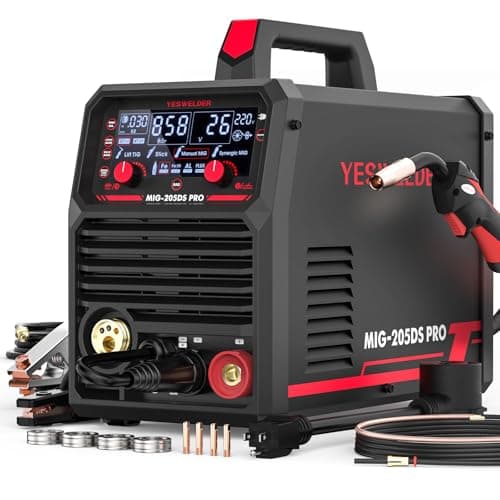 YESWELDER MIG-205DS PROPublishes 20–140 A stick on 110 V and 20–205 A on 220 V — the only machine here that tells you what stick output you get on each supply. | Best overall for stick at home | |
| 2 | 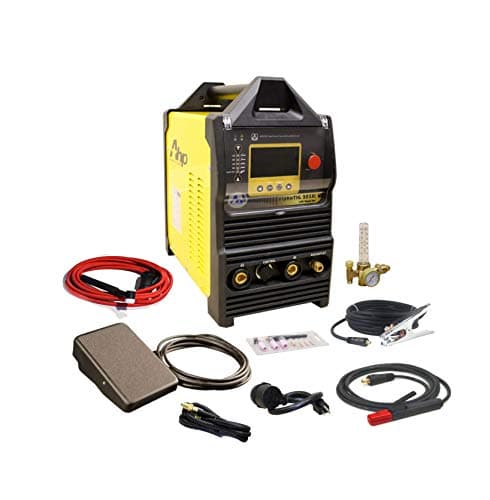 AHP AlphaTIG 200X35% at 155 A stick, published alongside a 60% TIG rating — the only machine here that states a stick duty cycle at all. | Best published stick duty cycle | $689.00 · View on Amazon #ad How this is funded · Price as of November 13, 2026 |
| 3 | 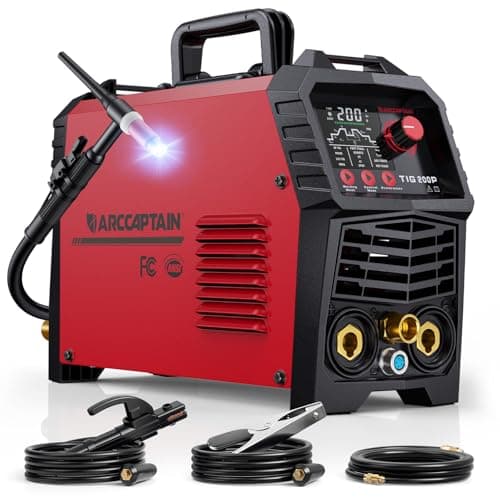 ARCCAPTAIN TIG200P10–170 A stick with a published 60% duty cycle at 11.8 lb, which is a genuinely portable stick machine at the bottom of the market. | Cheapest with a published stick range | $249.99 · View on Amazon #ad How this is funded · Price as of November 13, 2026 |
| 4 | 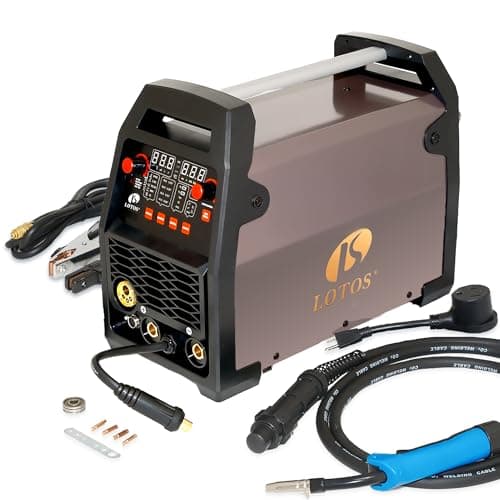 Lotos MIG180A 160 A stick rating alongside gas MIG and flux-core, so the stick machine is also the wire machine. | Only pick here that also runs wire | $359.98 · View on Amazon #ad How this is funded · Price as of November 13, 2026 |
The best stick welder for home use
For a home shop, the YESWELDER MIG-205DS PRO is the best stick welder, because it is the only machine here that publishes its stick output per supply voltage — 20–140 A on 110 V and 20–205 A on 220 V — and weighs 22.7 lb. The AHP AlphaTIG 200X is the only one publishing a stick duty cycle (35% at 155 A). The ARCCAPTAIN TIG200P is the cheapest with a published stick range (10–170 A at 60%, 11.8 lb). A note first: this registry holds no stick-only machine, because in this price band stick arrives inside multiprocess inverters — which is usually the better buy anyway.
Say the awkward part straight away. If you came here looking for a dedicated stick box, this page does not have one, and it is not an oversight. Inverter technology made multiprocess machines cheap enough that a stick-only machine at home-shop money buys you less than a machine that also MIGs and TIGs for the same price.
Why stick still earns a place in a home shop
Stick is not a beginner process you grow out of, and it is not a worse MIG. It does three things better than anything else available at this price.
It works on dirty steel. The flux coating on a stick electrode is a cleaning agent, and 6011 in particular is designed to burn through rust, paint, galvanizing and mill scale. Farm gates, fence posts, trailer frames and anything that has been outdoors for a decade are stick jobs.
It works outdoors. No shielding gas to blow away, and no wire feeder to get fussy about a long lead. A stick machine, a lead and a bag of rods is a complete welding setup you can carry across a field.
It handles thickness for the money. Stick puts a lot of heat into a joint, so a modest machine will weld heavier plate than the same money buys in a wire machine. Stick vs MIG welding works through where each genuinely wins.
What to look at on a stick machine
| Machine | Stick output | Duty cycle | Input | Weight |
|---|---|---|---|---|
| YESWELDER MIG-205DS PRO | 20–140 A at 110 V; 20–205 A at 220 V | Not published | 110 V or 220 V | 22.7 lb |
| AHP AlphaTIG 200X | Up to 155 A stated at duty | 35% at 155 A stick | 110 V or 220 V | 50 lb |
| ARCCAPTAIN TIG200P | 10–170 A | 60% | 110 V or 220 V | 11.8 lb |
| Lotos MIG180 | Up to 160 A DC (240 V rating) | Not published | 110–125 V or 210–250 V | Not published |
| YESWELDER FLUX-135PRO | Not published separately | Not published | 110 V | 11.4 lb |
The specification that matters most on stick and gets published least is the duty cycle, because stick work is long runs rather than short tacks — welder duty cycle explained sets out how to read the figure. The second is the amperage range, because that is what decides which electrode diameters you can run.
One stick-only feature worth knowing about
Dedicated stick machines often publish a hot-start or arc-force setting, which raises current momentarily at strike and prevents the rod sticking to the plate. Multiprocess machines sometimes have it and rarely publish it. If a machine does not state it, assume it does not have it and expect to learn a proper striking technique instead — which you should learn anyway.
Budget the rods, not just the machine
Stick's running costs are low and its learning curve has one extra step: electrode selection. 6011 digs through dirty metal and runs on almost anything. 6013 is easier to strike and tidier on clean thin material. 7018 is the strong, smooth, structural rod — and it is moisture-sensitive, so it needs to be kept dry rather than left in an open box in a damp garage.
You also need a chipping hammer and a wire brush, because like flux-core every stick weld leaves slag. And you need heavier PPE than MIG: stick spatter is larger and hotter, so a leather jacket and gauntlet gloves matter — the right helmet for stick is a darker shade and tougher cover lenses than a MIG setup.
Which one to buy
If you want one machine for everything: the YESWELDER MIG-205DS PRO. Published stick output on both supplies, MIG and flux-core too, 22.7 lb.
If TIG is also in the plan: the AHP AlphaTIG 200X. The only published stick duty cycle here, and real AC/DC TIG alongside it.
If portability is the point: the ARCCAPTAIN TIG200P. 170 A of stick at 60% duty cycle in 11.8 lb.
If the stick machine has to be the wire machine too: the Lotos MIG180. A published 160 A stick rating alongside gas MIG and flux-core, on either supply, with synergistic MIG doing the settings for you. No published duty cycle, though.
We have welded with none of these machines — how we pick explains exactly what the ranking above is and is not based on. If you have not decided between stick and gasless wire, flux core vs stick welding for beginners is the page to read first.
1. Best overall for stick at home
YESWELDER MIG-205DS PRO
Publishes 20–140 A stick on 110 V and 20–205 A on 220 V — the only machine here that tells you what stick output you get on each supply.
YESWELDER publishes gas MIG, flux-core, spool-gun MIG, lift TIG and stick; 110 V or 220 V input; 20 to 140 A stick at 110 V and 20 to 205 A stick at 220 V; 30 to 160 A MIG at 110 V and 30 to 205 A at 220 V; and 22.7 lb.
That per-voltage stick figure is why it leads. Stick electrode selection is driven by amperage: a 1/8 inch 6011 rod wants a meaningfully higher current than a 3/32 inch rod, and a machine that publishes 140 A on a household outlet tells you which rods are actually on the table. "200 A maximum" does not.
The 20 A low end matters too. Thin stock on stick is genuinely difficult, and a machine that starts low gives you a chance at it.
At 22.7 lb this is also the machine you can carry to a fence post, which is where stick earns its place in a home shop in the first place.
The honest costs: no published duty cycle in our registry, five processes means five consumable sets, and dealer support is thinner than Hobart's or Lincoln's.
What works
- Synergic mode sets voltage and wire speed from the thickness you select, which removes the single hardest part of learning MIG
- Spool-gun capable, so aluminum is a gun purchase rather than a machine purchase
- 22.7 lb for a 205 A dual-voltage machine is remarkable
What does not
- Lift TIG is DC only and has no foot pedal, so it will not weld aluminum and is not a route to Level 3
- Five processes means five sets of consumables to stock
- Dealer support and warranty handling are not on the level of Hobart or Lincoln
2. Best published stick duty cycle
AHP AlphaTIG 200X
35% at 155 A stick, published alongside a 60% TIG rating — the only machine here that states a stick duty cycle at all.
AHP publishes AC/DC TIG and stick; 110 V or 220 V single phase; 10 to 200 A; a 60% duty cycle at 200 A TIG and 35% at 155 A stick; mild steel capacity 24 gauge to 3/8 inch; AC balance 30 to 70%; and 50 lb.
A published stick duty cycle is rarer than it should be, and it is the figure that decides whether a machine will get through a long run of 7018 without stopping. 35% at 155 A means three and a half minutes of arc in every ten at a current high enough for 1/8 inch rod on 1/4 inch plate.
Buying this machine for stick alone would be odd — you are paying for the AC/DC TIG side. Buying it for TIG and getting a properly specified stick machine alongside is a good deal, and it is the realistic way a home shop ends up with capable stick.
Costs: the bundled torch and consumables are the first thing most owners replace, the manual is thin, and at 50 lb with a pedal it lives in one place — which undercuts stick's portability advantage.
What works
- AC output is what makes aluminum possible at all — this is the cheapest widely supported machine that has it
- 60% duty cycle at 200 A is a genuinely high rating for the price
- Adjustable AC balance lets you trade cleaning action against penetration instead of accepting one compromise
What does not
- The bundled torch and consumables are the first thing most owners replace
- The manual is thin. Budget time for learning the machine as well as the process
- 50 lb and a foot pedal means it lives in one place
Who this is wrong for: Anyone who wants stick for its portability. This is a 50 lb bench machine, which is the opposite of why most people want a stick welder.
3. Cheapest with a published stick range
ARCCAPTAIN TIG200P
10–170 A stick with a published 60% duty cycle at 11.8 lb, which is a genuinely portable stick machine at the bottom of the market.
ARCCAPTAIN publishes HF TIG, lift TIG, pulse TIG, spot TIG and stick; 110 V or 220 V dual voltage; TIG 10 to 200 A and stick 10 to 170 A; a 60% duty cycle; high-frequency non-contact arc start; and 11.8 lb.
170 A of stick at 11.8 lb is the specification that matters here. Stick's real advantage over wire processes is that it goes anywhere — no gas, no wire feeder, no draft sensitivity — and a machine light enough to carry with one hand is the version of that argument you can use.
A published 60% duty cycle is unusually good for the price, and on stick that is the figure you feel: stick work tends to be long runs on heavy material rather than short tacks.
Its DC-only TIG is irrelevant to stick, so unlike the AHP you are not paying for AC you will not use.
Costs: DC only, so no aluminum ever on the TIG side; a foot pedal and a better torch are extra; and support is thin.
What works
- High-frequency start rather than scratch start — the difference between a clean arc and a contaminated tungsten on every single strike
- 11.8 lb, so it goes to the work instead of the work coming to the bench
- Dual voltage, so it runs on a household outlet now and a 240 V circuit later
- The lowest price at which HF DC TIG is genuinely available from a supported brand
What does not
- DC only. No aluminum, now or ever, and no accessory changes that
- Still DC only, so the pulse that helps on thin stainless does nothing for aluminum
- A foot pedal and a better torch are extra, and both are worth budgeting for
4. Only pick here that also runs wire
Lotos MIG180
A 160 A stick rating alongside gas MIG and flux-core, so the stick machine is also the wire machine.
Lotos publishes gas MIG, gasless flux-core, stick, DC lift TIG, spot and spool-gun aluminum; 110–125 V or 210–250 V input; MIG to 180 A, DC TIG to 180 A and stick to 160 A; and a 1/4 inch mild-steel capacity.
The reason it is on a stick page is that it is the only machine in this group that also runs wire. The AHP and the ARCCAPTAIN above are better specified for stick alone; this is the one where the stick capability arrives attached to the MIG and flux-core machine a home garage was going to buy anyway.
Stick capability matters here for the usual reason: rusty, painted or outdoor steel is where MIG struggles and stick does not. For a garage with a yard full of weathered metal, having both on one switch is exactly right.
Three honest costs. Lotos publishes no stick duty cycle at all, which is the figure both picks above do publish and the one that decides whether you get through a long run of 7018. The 180 A and 160 A ratings are the 240 V numbers, with no separate 120 V output published. And the published capacity is 1/4 inch, which limits electrode size.
What works
- Stick capability matters more than it sounds: rusty, painted or outdoor steel is where MIG struggles and stick does not
- A published 160 A stick rating is a real stick machine, not a token third process on the switch
- Synergistic MIG sets voltage and wire speed together, so the first hour goes on welding rather than on a settings chart
What does not
- The headline 180 A and 160 A figures are the 240 V ratings; Lotos does not publish a separate 120 V output
- TIG is lift-start DC with no high-frequency start, and the torch is a separate purchase — treat it as a bonus, not a feature you bought
- The spool gun is also sold separately, and DC lift TIG cannot weld aluminum whatever gun you fit
- Dealer support and warranty handling are not on the level of Hobart or Lincoln
Who this is wrong for: Heavy rod work. With no published duty cycle and no published 120 V output, this is not the machine to plan a 5/32 inch electrode around — buy the ARCCAPTAIN above.
Questions people actually ask
What is the best stick welder for home use?
The YESWELDER MIG-205DS PRO, for a specific reason: it is the only machine in this registry that publishes its stick output per supply voltage - 20 to 140 A on 110 V and 20 to 205 A on 220 V - and it weighs 22.7 lb.
That matters because stick electrode diameter is chosen by amperage, so knowing what you get on the outlet you actually have tells you which rods are on the table.
Why are there no stick-only welders on this page?
Because this site's product registry does not hold one, and that reflects the market rather than an omission. Inverter technology made multiprocess machines cheap enough that at home-shop prices a stick-only box buys you less than a machine that also runs MIG and TIG.
So the honest answer for a home shop is to buy a multiprocess machine with a published stick amperage range and use its stick side without apology.
What amperage do I need for stick welding at home?
It follows from electrode diameter. A 3/32 inch rod runs at a modest current, a 1/8 inch rod wants meaningfully more, and a 5/32 inch rod is beyond what a 140 A machine on a 120 V circuit will deliver.
For general home work, a machine publishing around 140 A of stick on a household outlet covers 3/32 inch and 1/8 inch rods, which is most jobs. Heavier rod means a 240 V circuit.
Is stick welding harder to learn than MIG?
Yes, and not by as much as its reputation suggests. Striking the arc without sticking the rod takes practice, the arc length changes as the electrode burns down so you have to feed it in continuously, and you add electrode selection as a decision MIG does not have.
What you get in return is a process that works on rusty outdoor steel in a breeze, which no wire process with gas will do.
Which stick electrodes should I start with?
6011 for dirty, rusty or painted metal - it digs through contamination and is the reason stick is used on farm and outdoor repairs. 6013 for clean thinner material, because it strikes more easily and leaves a tidier bead.
7018 is the strong structural rod and worth learning, with one caveat: it is moisture-sensitive and needs to be kept dry rather than left in an open box in a damp garage.
Does stick welding need gas?
No. The flux coating on the electrode burns to produce its own shielding, which is why stick works outdoors and in wind where gas MIG cannot.
That also means no cylinder, no regulator, no cart and no draft sensitivity - a machine, a lead and a bag of rods is a complete welding setup.
Can I use a TIG welder for stick welding?
Most AC/DC TIG inverters publish stick as a second process, and several in this registry do - the AHP AlphaTIG 200X publishes a 35% duty cycle at 155 A stick, and the ARCCAPTAIN TIG200P publishes 10 to 170 A.
You swap the torch for an electrode holder and set the current. It is a genuine stick machine, not a token feature, and on the AHP it is the only published stick duty cycle on this page.
Sources
- YESWELDER — MIG-205DS PRO published specifications: 20–140 A stick at 110 V and 20–205 A at 220 V, 30–205 A MIG, five processes, 22.7 lb
- AHP — AlphaTIG 200X published specifications: AC/DC TIG and stick, 10–200 A, 60% duty cycle at 200 A TIG and 35% at 155 A stick, 50 lb
- ARCCAPTAIN — TIG200P published specifications: TIG 10–200 A and stick 10–170 A, 60% duty cycle, dual 110 V or 220 V, HF non-contact start, 11.8 lb
- Lotos — MIG180 published specifications: gas MIG, gasless flux-core, stick, DC lift TIG, spot and spool-gun aluminum; 110–125 V or 210–250 V; MIG to 180 A, stick to 160 A; spool gun and TIG torch sold separately; no duty cycle published
Read next
- Stick vs MIG welding for a home shop
Stick handles rust, wind and thick plate; MIG is faster and cleaner. Why most shops want both.
- Flux-core vs stick welding for beginners
Two processes that work outdoors on rusty steel — and why one is far easier to begin with.
- Best Welding Helmets for Stick Welding
Helmets ranked for stick welding, where a darker shade and tough consumables matter and a 2 A TIG rating does not.
- Welder Duty Cycle Explained
What a duty cycle rating means, the formula, and how much it really matters in a home shop.
- MIG vs TIG vs stick vs flux-core
All four processes in one table, and the honest answer about which to learn first.
- Find your level before you spend a penny
Most bad first welder purchases are not bad machines. They are the right machine bought by the wrong person, one level too early or one level too late.
Back to Find Your Level, or start over at Find Your Level.
Ryder M.
Ryder M. is the hands-on owner behind Magoo Media Group. He writes Arc & Bead's buying guides and picks every machine on the site. What every recommendation is based on — and what it is not based on — is set out on How We Pick.