The best welding helmets with grind mode
Grind mode is not a feature you shop for any more - nearly everything has it. What you should shop for is where the switch lives, because a grind mode inside the shell gets used half as often.
Arc & Bead is an Amazon Associate. If you buy through a link on this page we may earn a commission, at no extra cost to you. We have not physically tested the machines on this page and we say so on How We Pick.
Quick picks
Tap any row to jump to the full write-up further down this page.
| # | Product | Best for | Price |
|---|---|---|---|
| 1 | 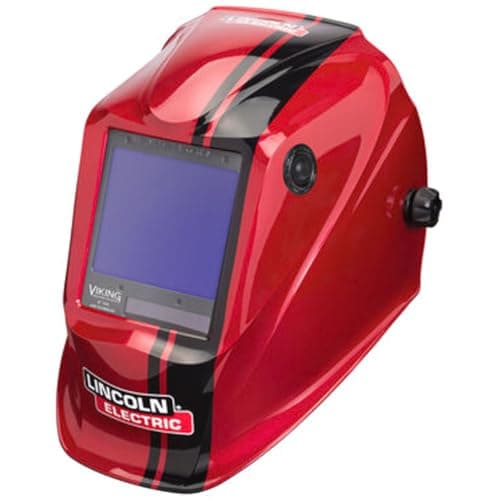 Lincoln Electric VIKING 3350A low-profile external grind button you can find by feel with the hood down, on a helmet that gives nothing else away either. | Best overall | $556.55 · View on Amazon #ad How this is funded · Price as of November 13, 2026 |
| 2 | 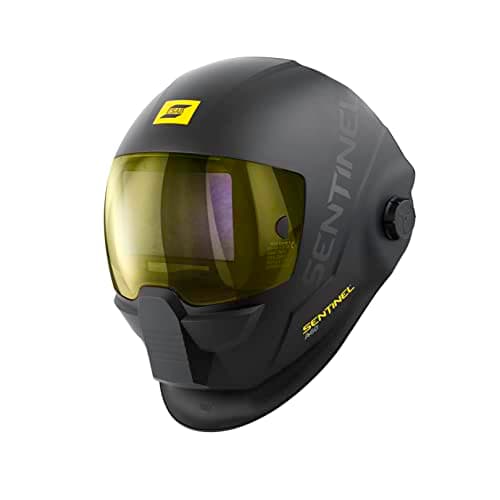 ESAB Sentinel A60An external grind button plus nine memory settings and half-shade increments - grind is one of several things you can change without stopping. | Best control set | |
| 3 | 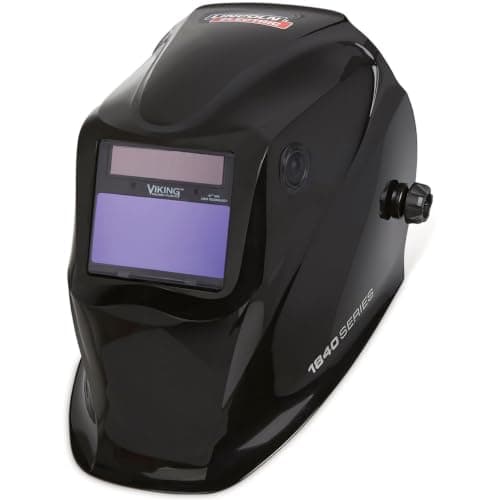 Lincoln Electric VIKING 1840The same low-profile external grind control and the same 2 A TIG rating as the 3350, in a smaller shell for considerably less. | Cheapest external grind control | |
| 4 | 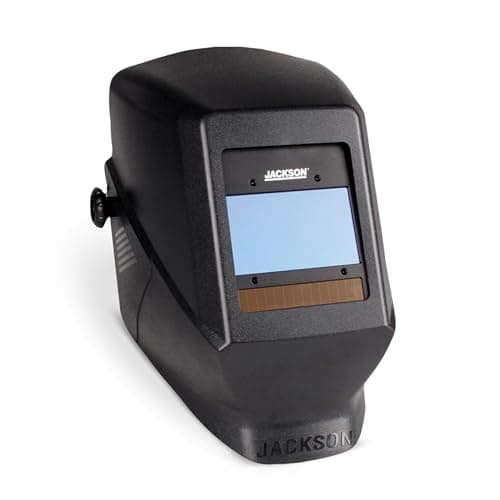 Jackson Safety Insight VariableWeld, torch and grind as published modes in a narrow, light shell - the helmet for someone whose neck ends the session. | Lightest with three modes | $203.99 · View on Amazon #ad How this is funded · Price as of November 13, 2026 |
| 5 | 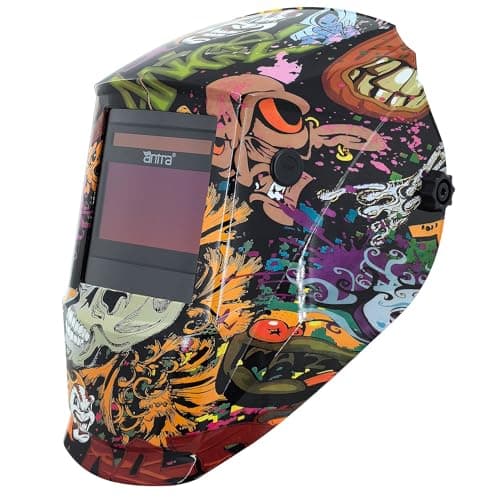 Antra DP3-6404The cheapest helmet in our registry with a dedicated grind/weld button, and it publishes a 2 A TIG rating as well. | Budget pick | $69.95 · View on Amazon #ad How this is funded · Price as of November 13, 2026 |
The short answer
Grind mode locks the lens in its light state — typically shade 2.5 to 3.5 — so the sparks from an angle grinder do not trigger it. Nearly every auto-darkening helmet made today has one. The specification that actually differs is where the control is: an external button you press with the hood down, or a setting inside the shell.
Our overall pick is the Lincoln VIKING 3350 for its low-profile external grind button. The best full control set is the ESAB Sentinel A60, which adds nine memory settings. The cheapest external grind control is the Lincoln VIKING 1840, and the budget pick is the Antra DP3-6404, the least expensive helmet in our registry with a dedicated grind/weld button.
Prices come from the live feed with their own "as of" date inside each buy button.
Why the location of one button is worth ranking on
Welding is not a continuous activity. Fabrication is a loop: fit, tack, check, grind the tack flat, re-fit, tack again. On a weekend project that loop runs dozens of times, and each iteration involves a decision about whether to bother changing modes.
With an external button the cost of switching is half a second and no change of posture. With an internal control it is: stop, lift the hood, reach inside, change the setting, lower the hood, find your position again. People do not do it. They grind with the hood up and safety glasses on, or they grind through a dark lens and cannot see what they are removing.
That is the whole argument, and it is why this page ranks a button rather than a mode. The lens mechanics are explained in passive vs auto-darkening helmets, and the shade chart has the numbers each process needs.
| Helmet | Grind control | Light state / grind shade | Other modes | Optical class |
|---|---|---|---|---|
| Lincoln VIKING 3350 | Low-profile external button | Not published separately | Variable 5-13 covers plasma | 1/1/1/1 |
| ESAB Sentinel A60 | External button | Light state 3 (3/5-13 range) | Nine memory settings, shade lock | 1/1/1/1 |
| Lincoln VIKING 1840 | Low-profile external control | DIN 2.5 light state | Variable 7-13 | 1/1/1/1 |
| Jackson Insight Variable | Published weld / torch / grind modes | Not published | Torch mode for oxy-fuel and brazing | 1/1/1/1 |
| Antra DP3-6404 | Grind/weld button | Light state 3 (3/5-13 range) | Tack, weld and cut memory presets | Not published - treat as unverified |
| Miller Digital Infinity | Mode selection including grind | Grind 2.5; light state 2.5 | Weld, cut, grind, X-Mode | 1/1/1/2 |
Grind mode is not eye protection for grinding.
A helmet in grind mode protects your face from sparks and fragments. It is not a substitute for impact-rated safety glasses underneath, because a lifted hood leaves your eyes exposed to exactly the debris a grinder throws. Wear glasses under the helmet — every helmet on this page is designed to allow it, and the deeper shells allow prescription frames. The best angle grinders for welding covers the guard and disc side of the same safety question.
What grind mode actually does, and its one failure
In grind mode the lens is held in its light state and the arc sensors are ignored. That is the point — grinder sparks are bright enough to trigger a sensor, and a lens flickering dark while you are grinding is both useless and unnerving.
The failure mode follows directly from that: a helmet left in grind mode does not darken when you strike an arc. It is the most common way welders flash themselves, and it is why external buttons with a tactile detent and helmets that time out of grind mode exist. If you take one habit from this page, make it a deliberate check before every arc strike.
The testing procedure for whether your lens is working at all is in how to test an auto-darkening welding helmet.
Grind mode is not a cut mode
Three different things get confused here. Grind is the light state with sensors off. Cut is a lower dark shade — typically 5 to 8 — for plasma cutting and oxy-fuel, which produce far less light than an arc. Torch on the Jackson sits in the same territory for gas work.
A helmet whose range starts at 9, like the Jackson, has no cut mode in the plasma sense. If you own or plan to own a plasma cutter you need a shade 5 low end, which the 3350, the Sentinel A60 and the Antra all publish. The best welding helmets for plasma cutting is scoped to that, and do you need a welding helmet for plasma cutting answers the prior question.
How we picked these
Ranked on control access, not on the existence of the mode. Almost every auto-darkening helmet has grind mode, so ranking on that would produce a list of every helmet in the registry. External, reachable-with-the-hood-down control is the axis that separates them.
Published figures only. Where a maker does not publish a separate grind shade or an optical class, the table says so rather than filling the gap. We have worn none of these helmets and publish no scores.
One budget pick, named as such. The Antra is the cheapest helmet we list with a dedicated grind/weld button, and its unpublished optical class is stated on the page rather than left for you to discover. More on the method on how we pick.
1. Best overall
Lincoln Electric VIKING 3350
A low-profile external grind button you can find by feel with the hood down, on a helmet that gives nothing else away either.
Lincoln publishes the VIKING 3350 with a low-profile external grind button, a 12.5 sq in viewing area, 1/1/1/1 optical clarity, a variable 5–13 shade range, a 2 A TIG rating stated for AC and DC, four arc sensors, a 1/25,000 s switching speed, the 4C lens with X6 headgear, 22 oz and a five-year warranty.
The button is the pick. An external control means the sequence is: weld, press, grind, press, weld — without lifting the hood, without putting the grinder down, and without losing where you were. Fit-up is a cycle of tack, grind, check, tack, and doing that forty times in an afternoon is where the saving lives.
Low-profile matters as much as external. A proud button on the side of a shell is something to catch on the work and something to press accidentally while the hood is down; a recessed one you can still find by feel is the right compromise.
Against it: several times the price of a budget auto-darkening helmet, and physically large enough that in a tight corner the shell finds things to bump into.
What works
- 12.5 sq in of view at 1/1/1/1 clarity is the combination that makes a helmet stop being something you tolerate
- The external grind button means you switch modes without lifting the hood — the single feature you notice most every day
- Shade 5 low end covers plasma cutting, so one helmet spans all four levels
What does not
- Costs several times a budget auto-darkening helmet
- Physically large, and in a tight corner the shell finds things to bump into
2. Best control set
ESAB Sentinel A60
An external grind button plus nine memory settings and half-shade increments - grind is one of several things you can change without stopping.
ESAB publishes the Sentinel A60 with an external grind button and nine memory settings, a 13.02 sq in viewing area, a 1/1/1/1 optical class, a 3/5–13 shade range in 0.5-step increments with shade lock, a 2 A DC TIG rating, four arc sensors, a 1/25,000 s light-to-dark switching speed with an adjustable 0.1–0.9 s dark-to-light delay, and adjustable Halo headgear.
The nine memories are the extension of the same idea the grind button represents. If you run MIG on steel, TIG on stainless and a plasma cutter, each wants a different shade and sensitivity, and an internal menu means a hood-off reconfiguration every time you change task. Stored settings plus an external control means you change jobs without changing posture.
Half-shade increments matter for the same practical reason: being able to settle on 10.5 rather than choosing between 10 and 11 is the difference between a shade that suits your eyes and one that nearly does.
Against it: it is near the top of our price range, nine memories is more configuration than a two-process home shop will use, and it replaces the Sentinel A50 — so older accessory guides may not match this shell.
What works
- Published DC TIG rating down to 2 A — the one specification that decides whether a helmet is usable on thin stainless
- 13.02 sq in at a full 1/1/1/1 optical class, which is a combination almost nothing else offers
- Half-shade increments and shade lock let you settle on an exact shade rather than jumping between whole numbers
- External grind button, so switching modes does not mean lifting the hood and losing your torch position
What does not
- The most expensive helmet on this site apart from the Miller, and much of what it adds over a VIKING 3350 is refinement
- Nine memory settings is more configuration than a home shop running one or two processes will ever use
- Replaces the outgoing Sentinel A50, so older reviews and accessory guides may not match this shell
3. Cheapest external grind control
Lincoln Electric VIKING 1840
The same low-profile external grind control and the same 2 A TIG rating as the 3350, in a smaller shell for considerably less.
Lincoln publishes the VIKING 1840 with a low-profile external grind control, a 7.0 sq in viewing area, a variable 7–13 shade range, 1/1/1/1 optical clarity, a published 2 A DC TIG rating, the 4C lens, and 4-point pivot headgear with ratchet tightening.
This is the value answer on a grind-mode page. The two specifications most worth paying for on a helmet — full optical clarity and a published 2 A TIG rating — are both here, as is the external control, and the money saved against the 3350 is almost entirely window size.
Who it is for: someone who grinds as much as they weld, wants to switch without lifting the hood, and does not need a large window because the work is at the bench.
Against it: 7.0 sq in is a genuinely small window next to the 12 to 13.4 sq in helmets, the shade range starts at 7 so it does not reach the shade 5 end plasma cutting wants, and the DIN 2.5 light state is darker between welds than the helmets above it.
What works
- A published 2 A DC TIG rating — the same figure as helmets costing several times more
- Full 1/1/1/1 optical clarity, which budget helmets almost never publish at all
- 4-point pivot headgear with two top straps spreads weight properly for long seated TIG sessions
What does not
- 7.0 sq in is a small window — noticeably tighter than the 12.5 to 13.4 sq in helmets above it
- Shade range starts at 7, so it does not reach the shade 5 end that plasma cutting wants
- DIN 2.5 light state rather than the 3 or 4 of the helmets above it, so the view between welds is darker
4. Lightest with three modes
Jackson Safety Insight Variable
Weld, torch and grind as published modes in a narrow, light shell - the helmet for someone whose neck ends the session.
Jackson publishes the Insight Variable with weld, torch and grind modes, a 3.94 x 2.36 in viewing area (9.3 sq in), a variable 9–13 shade range, a 1/1/1/1 optical class, a narrow HSL shell with an extended front lip, and ANSI Z87.1 certification.
Three published modes rather than two is the detail here: torch mode sits between weld and grind for oxy-fuel and brazing work, where there is light but not an arc. For a shop that does gas work as well as electric, that is a mode you will actually use.
The reason it is on the page though is weight. Lightness is the complaint that genuinely ends long sessions, and Jackson's shells and headgear parts are also easy to source separately, which is unusual.
Against it: the viewing area is small next to a 3350 or a panoramic helmet, and it is not a low-amperage TIG helmet — the 9–13 range does not reach shade 5 for plasma and Jackson publishes no low-amp TIG rating.
What works
- Light on the neck, which is the complaint that actually ends a long session
- Jackson's shells and headgear parts are easy to source separately
What does not
- Viewing area is small next to a VIKING 3350 or a panoramic helmet
- Not a low-amperage TIG helmet
Who this is wrong for: TIG at low amperage and plasma cutting. The shade range starts at 9 and no low-amperage TIG rating is published, so it is a MIG, stick and gas helmet.
5. Budget pick
Antra DP3-6404
The cheapest helmet in our registry with a dedicated grind/weld button, and it publishes a 2 A TIG rating as well.
Antra publishes the DP3-6404 with a grind/weld button alongside tack, weld and cut memory presets, a true-color lens with full digital control and display, a 3/5–13 shade range with shade lock, a published DC TIG rating down to 2 A, and a solar cell with battery assist.
The budget pick in the strict sense: the least expensive registry product that does this page's job. A dedicated grind/weld button at the bottom of the market is unusual — the normal arrangement at this price is a shade dial inside the shell and nothing else — and the shade 5 low end means it covers plasma cutting too.
The published 2 A TIG rating is remarkable at the price. Most budget helmets publish no TIG rating at all, which is a quiet way of saying the lens may not trigger on a low-amperage arc.
Against it: Antra does not publish a 1/1/1/1 optical class, and over a long session you can feel the difference; headgear is the weak point on budget helmets generally and this is no exception; and it is a small shell — next to a 3350 the view is noticeably tighter.
What works
- A published 2 A TIG rating at the bottom of the market, where the usual answer is no rating at all
- Shade 5 low end covers plasma cutting, so one cheap helmet spans more than MIG
- Quick grind/weld button and shade lock — two things that are normally the first upgrade
- Cheap enough that starting here and upgrading later costs less than agonizing over it
What does not
- Antra does not publish a 1/1/1/1 optical class for it, and over a long session you can feel the difference
- Headgear is the weak point on budget helmets generally, and this one is no exception
- A small shell: next to a VIKING 3350 the view is noticeably tighter
Questions people actually ask
What does grind mode do on a welding helmet?
It locks the lens in its light state - usually shade 2.5 to 3.5 - and ignores the arc sensors, so grinder sparks cannot trigger the lens dark while you work.
Without it, a helmet flickers between light and dark every time a shower of sparks crosses a sensor, which makes grinding with the hood down impossible.
Do all welding helmets have grind mode?
Almost every auto-darkening helmet made today does, including budget models. That is why the feature on its own is no longer worth shopping for.
What differs is the control. Some helmets have an external button you can press with the hood down; others bury the setting inside the shell, which means lifting the hood every time.
Is an external grind button worth paying for?
If you grind as much as you weld - which is most people doing fabrication rather than production welding - yes. Fit-up is a loop of tack, grind, check, tack, and an external button turns each switch into half a second rather than a change of posture.
An internal control means most people simply do not bother switching, and then grind either with the hood up or through a dark lens.
Can you grind with a welding helmet on?
Yes, in grind mode, and it is the safer way to do it - the shell protects your whole face from fragments. You still need impact-rated safety glasses underneath, because the moment you lift the hood your eyes are exposed to the debris.
Every helmet on this page allows glasses underneath, and the deeper shells take prescription frames.
What is the cheapest welding helmet with grind mode?
In our registry it is the Antra DP3-6404, which publishes a dedicated grind/weld button plus tack, weld and cut memory presets, a 3/5-13 shade range with shade lock and a DC TIG rating down to 2 A.
Antra does not publish a 1/1/1/1 optical class for it, which is the honest trade at that price.
Is grind mode the same as cut mode?
No. Grind mode is the light state with the sensors switched off, for grinding and cleaning. Cut mode is a dark shade of roughly 5 to 8 for plasma cutting and oxy-fuel, which produce much less light than an electric arc but still need eye protection.
A helmet whose shade range starts at 9 has no usable cut mode. For plasma you want a shade 5 low end.
Sources
- Lincoln Electric - VIKING 3350 published specifications: low-profile external grind button, 12.5 sq in viewing area, variable shade 5-13, 1/1/1/1 optical clarity, 2 A TIG rating for AC and DC, four arc sensors, 1/25,000 s switching, 4C lens with X6 headgear, 22 oz, five-year warranty (read 2026-10-29, recorded in this site's product registry, ASIN B07V9T5XQ1)
- ESAB - Sentinel A60 published specifications: external grind button, nine memory settings, 13.02 sq in viewing area, 1/1/1/1 optical class, shade 3/5-13 in 0.5-step increments with shade lock, DC TIG down to 2 A, 1/25,000 s light-to-dark with 0.1-0.9 s adjustable delay, adjustable Halo headgear (recorded in this site's product registry, ASIN B0BLQ92744)
- Lincoln Electric - VIKING 1840 published specifications: low-profile external grind control, 7.0 sq in viewing area, variable shade 7-13, 1/1/1/1 optical class, DC TIG down to 2 A, DIN 2.5 light state, 4C lens, 4-point pivot headgear with ratchet tightening (recorded in this site's product registry, ASIN B0H1JTHQTN)
- Jackson Safety - Insight Variable published specifications: variable shade 9-13 with weld, torch and grind modes, 3.94 x 2.36 in viewing area, 1/1/1/1 optical class, narrow HSL shell with extended front lip, ANSI Z87.1 (recorded in this site's product registry, ASIN B01HTMLSGG)
- Antra - DP3-6404 published specifications: grind/weld button with tack, weld and cut memory presets, true-color lens with full digital control and display, shade 3/5-13 with shade lock, DC TIG down to 2 A, solar cell with battery assist (read 2026-10-16, recorded in this site's product registry, ASIN B0CV9P2YLP)
- Miller - Digital Infinity published mode set, used for comparison: weld 8-13, cut 5-8, grind 2.5 and X-Mode 8-13, shade 2.5 light state, 1/1/1/2 optical clarity (read 2026-10-29, recorded in this site's product registry, ASIN B0DC1V62WG)
- ANSI Z87.1 - occupational and educational personal eye and face protection devices, the standard cited on the Jackson listing
Read next
- The best large view welding helmets
Four welding helmets ranked on published viewing area in square inches, with optical class read alongside it and the cheapest panoramic helmet in our registry named as the budget pick.
- Welding helmet shade chart
OSHA's minimum protective shades by process and arc current, and how to use them in practice.
- The best welding helmets under $500
Six welding helmets under $500 at current live prices, ranked on published optical class and low-amperage TIG rating, with the cheapest helmet in our registry as the budget pick.
- How to Test an Auto-Darkening Welding Helmet
The test button, the sunlight check and the scrap-metal check — plus why the UV and IR protection does not depend on the lens darkening.
- The best angle grinders for welding
Four 4-1/2 inch grinders ranked on kickback protection, dust sealing and tool-free changes rather than on raw amperage, scoped to welding work.
- The best welding helmets for plasma cutting
Plasma needs shade 8, not 10, plus a lens that triggers on an arc partly hidden in the kerf.
Back to Helmets & PPE, or start over at Find Your Level.
Ryder M.
Ryder M. is the hands-on owner behind Magoo Media Group. He writes Arc & Bead's buying guides and picks every machine on the site. What every recommendation is based on — and what it is not based on — is set out on How We Pick.