Best Welding Helmets for Stick Welding
Stick runs hotter, throws more, and gets welded in worse positions than anything else in a home shop. It is also the one process where you do not need to pay for a low-amperage lens.
Arc & Bead is an Amazon Associate. If you buy through a link on this page we may earn a commission, at no extra cost to you. We have not physically tested the machines on this page and we say so on How We Pick.
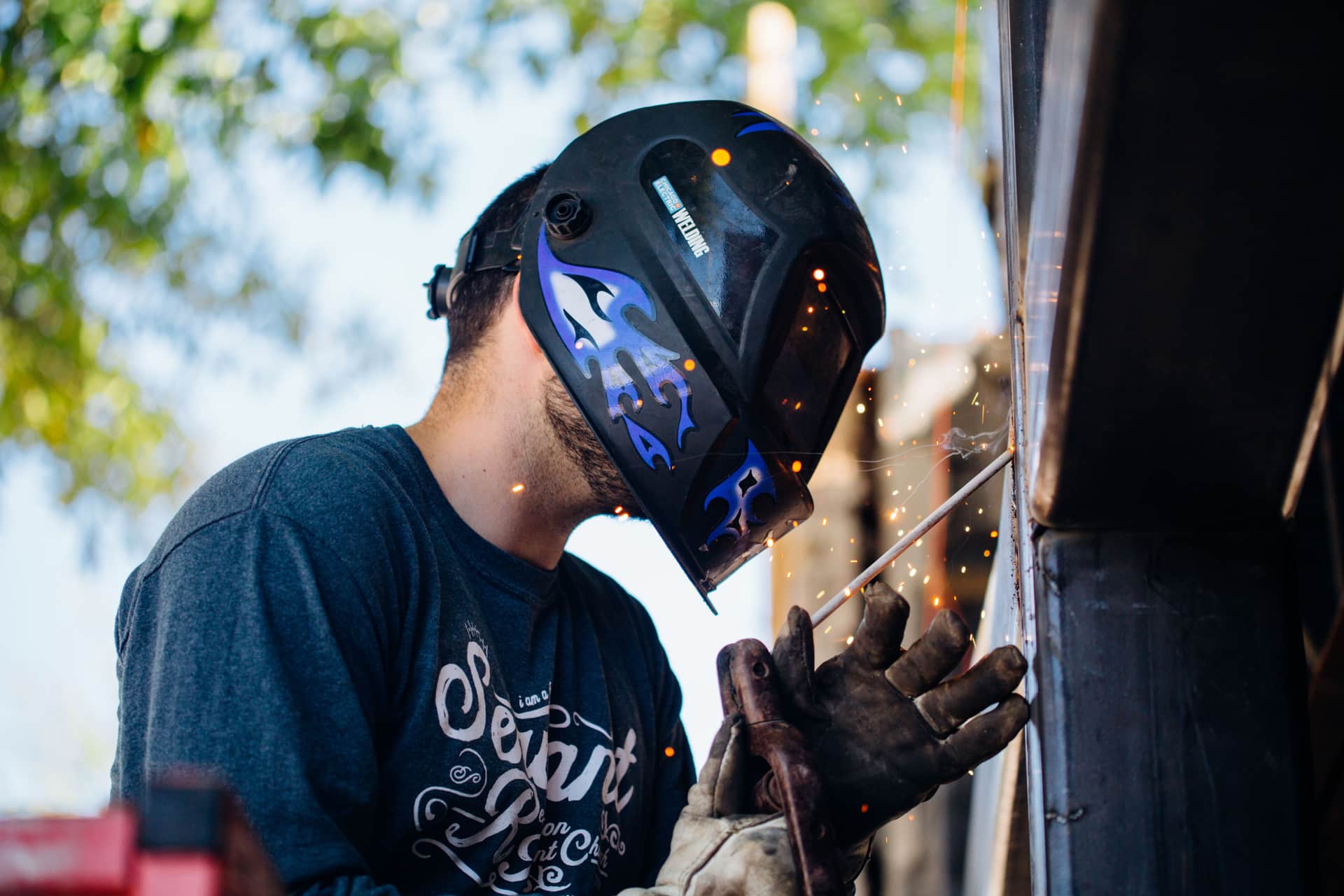
Quick picks
Tap any row to jump to the full write-up further down this page.
| # | Product | Best for | Price |
|---|---|---|---|
| 1 | 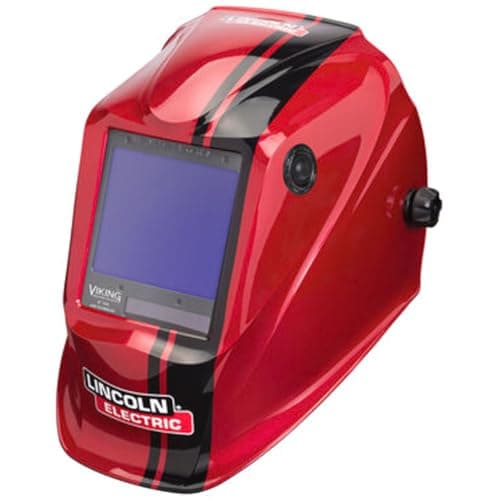 Lincoln Electric VIKING 335012.5 sq in at a full 1/1/1/1 optical class with an external grind button — the combination that matters most when half the job is chipping slag. | Best overall for stick | $556.55 · View on Amazon #ad How this is funded · Price as of November 13, 2026 |
| 2 | 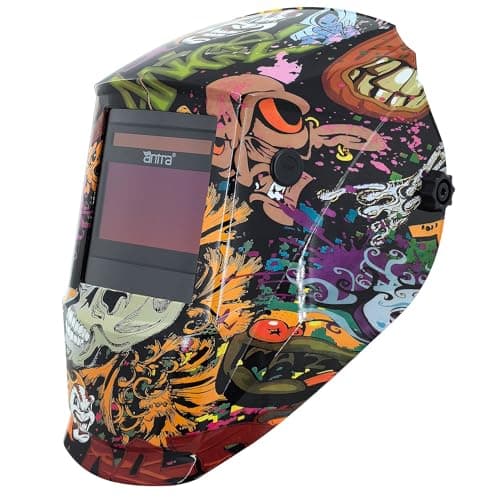 Antra DP3-6404Shade 3/5–13 with shade lock and a grind/weld button at the bottom of the market, and stick is the process where the cheap lens gives up least. | Best budget helmet for stick | $69.95 · View on Amazon #ad How this is funded · Price as of November 13, 2026 |
| 3 | 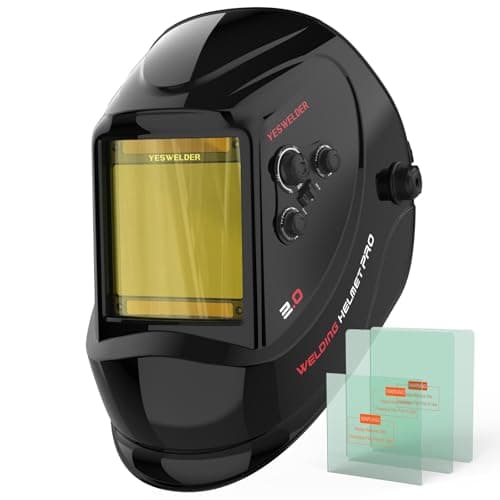 YESWELDER LYG-M800H large-view helmetA panoramic true-colour lens for budget-helmet money, and a deep shell that takes prescription glasses without pressure. | Best large view on a budget | |
| 4 | 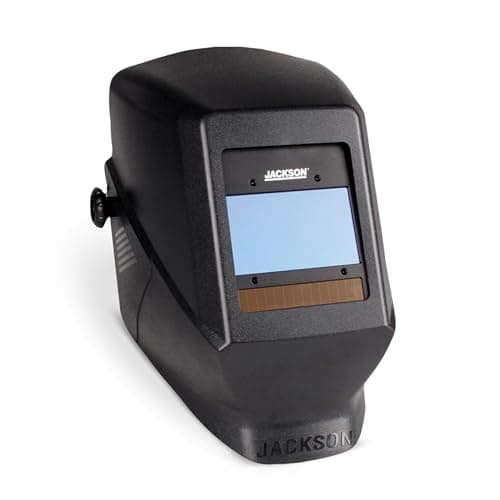 Jackson Safety Insight VariableVariable shade 9–13 at a full 1/1/1/1 optical class, light on the neck, with shells and headgear parts you can buy separately. | Best for long sessions | $203.99 · View on Amazon #ad How this is funded · Price as of November 13, 2026 |
The best welding helmet for stick welding
The Lincoln Electric VIKING 3350 is the best welding helmet for stick welding: 12.5 sq in of view at a full 1/1/1/1 optical class, variable shade 5–13 and a low-profile external grind button, which matters because stick welding is a cycle of welding and chipping slag. The Antra DP3-6404 is the best budget choice — stick is the one process where a cheap lens gives up almost nothing, because a stick arc is far too bright for any working lens to miss. What stick does not need is a 2 A low-amperage TIG rating, which is where most of the price of a premium helmet goes.
Every helmet page on this site is organized around what the process demands of the lens. For TIG that means trigger sensitivity at a couple of amps. For stick it is three completely different things, and getting them in the right order saves real money.
What stick welding actually asks of a helmet
A dark enough shade. Stick runs at high current and the arc is open — no shielding gas cup, no wire feeding into a shroud, just a bare electrode burning. That produces more visible light than a MIG arc at the same apparent brightness, so stick sits at the darker end of any shade chart. Our shade chart by process carries the figures; the practical point is that a helmet whose range tops out early is the wrong helmet, and one whose range starts at 9 rather than 5 loses you nothing on stick.
Consumables that survive spatter. Stick throws far more spatter than a gas-shielded process, and it all lands on the front cover lens. Cover lenses are the part that actually wears out on a welding helmet, and on stick they wear out faster — welding helmet lens covers covers which ones to stock. Buying a helmet whose cover lenses are a common stocked size is worth more than one extra square inch of window.
Headgear that holds position. Stick is the process you use when the work cannot come to the bench: a gate hinge, a trailer frame, a fence post. That means overhead, kneeling and on-your-back welding, and in those positions the helmet is being held on by the headgear rather than resting on your head.
What stick does not need, and why that saves you money
The specification that drives helmet prices upward at the top of the market is the published low-amperage DC TIG rating — the minimum arc current at which the lens is guaranteed to trigger. Helmets rated to 2 A cost real money, and on TIG that money is well spent, because a lens that misses a 15 A arc gives you a flash.
A stick arc is nothing like that. There is no setting on a stick machine quiet enough to challenge a working auto-darkening lens. So on a stick-only page, the honest advice is that the rating is not what to buy on — and that moves a lot of perfectly good cheap helmets into contention.
The published numbers, side by side
| Specification | VIKING 3350 | Antra DP3-6404 | YESWELDER LYG-M800H | Jackson Insight Variable |
|---|---|---|---|---|
| Viewing area | 12.5 sq in | Not published | Panoramic (not published) | 3.94 x 2.36 in |
| Shade range | Variable 5–13 | 3/5–13 with shade lock | Variable, not published | Variable 9–13 |
| Optical class | 1/1/1/1 | Not published | Inconsistently published | 1/1/1/1 |
| Grind mode | External button | Grind/weld button | Light-state grind mode | Grind mode |
| Reaches plasma's shade 5 | Yes | Yes | Not published | No |
| Headgear | X6 | Budget — the weak point | Coarse adjustment | Narrow HSL shell, extended front lip |
| Power | Not published in our registry | Solar with battery assist | Solar with replaceable battery | Not published in our registry |
| Published standard | Not published in our registry | Not published in our registry | Not published in our registry | ANSI Z87.1 |
Notice that the two helmets publishing a full 1/1/1/1 optical class are the Lincoln and the Jackson, and the Jackson is the cheaper of the two by a wide margin. If clarity over a long session is what you care about and a small window is acceptable, that is the value pick hiding in this table.
The helmet is not the only PPE stick changes
Stick spatter is larger, hotter and travels further than MIG spatter, and slag chipping flings hot material at your hands and forearms. A leather jacket matters more here than on any other process, and thick gauntlet gloves rather than TIG gloves are the right choice — welding gloves and jackets covers both. Stick on rusty or painted steel also produces heavy fume, so respiratory protection belongs in the same purchase.
Which one to buy
If this is the helmet you keep: the VIKING 3350. The external grind button, the 12.5 sq in window and the X6 headgear are each worth something specific on stick, and together they are the helmet most welders end up with anyway.
If the budget is tight: the Antra DP3-6404. Stick is the process where a cheap lens costs you least, and this one has shade lock and a grind button.
If you want the view: the YESWELDER LYG-M800H. Seeing the slag line and the electrode at the same time is worth more on stick than people expect.
If sessions are long: the Jackson Insight Variable. A published 1/1/1/1 class and a light shell, with a shade range that happens to be exactly stick's.
We have not tested any of these helmets, and the ranking is built from published specifications plus what the process demands — how we pick sets out exactly what that means. If you are still deciding between processes, stick vs MIG welding is the page before this one.
1. Best overall for stick
Lincoln Electric VIKING 3350
12.5 sq in at a full 1/1/1/1 optical class with an external grind button — the combination that matters most when half the job is chipping slag.
Lincoln publishes a 12.5 sq in viewing area, a variable shade 5 to 13 range, a 1/1/1/1 optical clarity rating, a 4C lens with X6 headgear, and a low-profile external grind button.
The external grind button is the feature that earns first place on a stick page specifically. Stick welding is a cycle: run a bead, chip the slag, wire-brush it, run the next one. A helmet with no grind mode means lifting the hood every time, and a helmet with grind mode buried in an internal menu means lifting the hood to reach the menu. A button on the outside of the shell is the difference between staying in position and resetting your whole body every two inches.
The shade range covers stick at every current you will run at home, and the shade 5 low end means the same helmet works for plasma cutting — which matters because stick and plasma tend to live in the same kind of shop, on the same kind of material.
X6 headgear is the quiet third argument. Stick gets welded in positions MIG does not: on your back under a trailer, overhead on a gate hinge, kneeling on a slab. Headgear that spreads load properly is what makes a helmet stay put when your head is not upright.
Two honest costs: it is several times the price of a budget auto-darkening helmet, and the shell is physically large, so in a tight corner it finds things to bump into.
What works
- 12.5 sq in of view at 1/1/1/1 clarity is the combination that makes a helmet stop being something you tolerate
- The external grind button means you switch modes without lifting the hood — the single feature you notice most every day
- Shade 5 low end covers plasma cutting, so one helmet spans all four levels
What does not
- Costs several times a budget auto-darkening helmet
- Physically large, and in a tight corner the shell finds things to bump into
2. Best budget helmet for stick
Antra DP3-6404
Shade 3/5–13 with shade lock and a grind/weld button at the bottom of the market, and stick is the process where the cheap lens gives up least.
Antra publishes a true-colour lens with full digital control and display, a 3/5 to 13 shade range with shade lock, a DC TIG rating down to 2 A, tack, weld and cut memory presets plus a grind/weld button, and solar power with battery assist.
Here is why a cheap helmet is a better idea on stick than on any other process. The hardest thing you can ask an auto-darkening lens to do is trigger reliably on a very low-current arc — that is the TIG problem, and it is what separates a $90 helmet from a $400 one. Stick runs at high current and makes an enormous amount of light. Every working lens triggers on it.
So on stick, the premium you would pay for a 2 A-rated lens buys you nothing, and this helmet already publishes that rating anyway. What you are left comparing is shade range, grind mode and comfort — and it has the first two.
Shade lock deserves a mention on a stick page. Stick arcs flare and wander far more than a wire process, and a lens that keeps hunting between two shades is genuinely distracting. Locking the shade removes it.
Two costs: Antra does not publish a 1/1/1/1 optical class, which you feel over a long session, and budget headgear is the weak point on cheap helmets generally — including this one, which matters more on stick than elsewhere.
What works
- A published 2 A TIG rating at the bottom of the market, where the usual answer is no rating at all
- Shade 5 low end covers plasma cutting, so one cheap helmet spans more than MIG
- Quick grind/weld button and shade lock — two things that are normally the first upgrade
- Cheap enough that starting here and upgrading later costs less than agonizing over it
What does not
- Antra does not publish a 1/1/1/1 optical class for it, and over a long session you can feel the difference
- Headgear is the weak point on budget helmets generally, and this one is no exception
- A small shell: next to a VIKING 3350 the view is noticeably tighter
Who this is wrong for: All-day overhead or out-of-position work. The headgear is where this helmet runs out, and that is exactly the work stick gets used for.
3. Best large view on a budget
YESWELDER LYG-M800H large-view helmet
A panoramic true-colour lens for budget-helmet money, and a deep shell that takes prescription glasses without pressure.
YESWELDER publishes a true-color panoramic lens, a variable shade range with a light-state grind mode, and solar power with a replaceable battery.
A big window helps stick more than it helps MIG, for a reason that is easy to miss. With a wire process your eye is on a small bright puddle. With stick you are also watching the end of a consumable electrode get shorter, judging your arc length from it, and tracking a slag line that runs behind the puddle. More field of view means more of that visible without moving your head.
The true-colour lens helps the same way. A traditional green lens flattens the distinction between molten metal and molten slag, and on stick that distinction is the whole skill — if you cannot see the slag running ahead of the puddle, you will trap it.
The deep shell is the third point and the most practical: it accommodates most prescription glasses without pressure on the temples, which is the thing that ends a session for a lot of people. Welding helmets for glasses wearers covers that properly.
Honest limits: published optical-class figures are inconsistent between listings, so treat unstated clarity as unverified, and the headgear adjustment is coarse next to an X6 or Halo system.
What works
- Panoramic view at a fraction of a name-brand large-view helmet's price
- True-color lens makes the puddle and the weld pool edge much easier to read than a green lens
- Deep shell accommodates most prescription glasses without pressure on the temples
What does not
- Published optical-class figures are inconsistent between listings — treat unstated clarity as unverified
- Headgear adjustment is coarse compared with the X6 or Halo systems
4. Best for long sessions
Jackson Safety Insight Variable
Variable shade 9–13 at a full 1/1/1/1 optical class, light on the neck, with shells and headgear parts you can buy separately.
Jackson publishes a 3.94 x 2.36 in viewing area, a variable shade 9 to 13 range with weld, torch and grind modes, a 1/1/1/1 optical class, a narrow HSL shell with an extended front lip, and ANSI Z87.1 compliance.
The shade range is the interesting part on a stick page. Shade 9 to 13 sounds limited next to a 3/5 to 13 helmet, and for stick it is the range you actually use — stick runs at currents that want the darker end of any shade chart, so nothing is lost. What you get instead is a full 1/1/1/1 optical class at a mid-range price, which the wider-range budget helmets do not publish.
Weight is the other argument, and it is the complaint that genuinely ends a long session. Neck fatigue builds over hours, and a lighter shell with a narrow profile is worth more than a bigger window to someone running electrodes all afternoon.
The extended front lip is a small, very stick-specific detail: it covers the gap under the chin where spatter finds the neck when you are welding below waist height.
Two costs. The viewing area is small next to a VIKING 3350 or a panoramic helmet, and it is not a low-amperage TIG helmet — which, on this page, is not a problem.
What works
- Light on the neck, which is the complaint that actually ends a long session
- Jackson's shells and headgear parts are easy to source separately
What does not
- Viewing area is small next to a VIKING 3350 or a panoramic helmet
- Not a low-amperage TIG helmet
Who this is wrong for: Anyone who also wants to plasma cut in the same helmet. The shade range starts at 9 and plasma wants the shade 5 end.
Questions people actually ask
What shade do I need for stick welding?
The darker end of the chart. Stick runs at high current with an open arc - no gas cup and no shroud - so it produces more light than a MIG arc that looks similarly bright, and the shade needed rises with the current you are running.
Our welding helmet shade chart carries the per-process figures. The practical buying rule is that a helmet whose range tops out early is the wrong helmet, while one whose range starts at shade 9 rather than 5 loses you nothing on stick.
Do I need an expensive helmet for stick welding?
No, and stick is the clearest case of that on this site. What drives helmet prices up at the top of the market is the published low-amperage DC TIG rating - the minimum arc current at which the lens is guaranteed to trigger.
A stick arc is far too bright for any working lens to miss, so that rating buys you nothing here. Spend the money on shade range, a grind button and headgear instead.
Why does a grind button matter so much for stick welding?
Because stick welding is a cycle of welding and then removing slag. Every bead has to be chipped and wire-brushed before the next one, and a helmet with no grind mode means lifting the hood each time.
An external grind button - as on the Lincoln VIKING 3350 - lets you switch the lens to its light state without lifting the helmet or losing your position, which on a long joint is the difference between staying set and resetting your whole body every few inches.
Is a true-colour lens worth it for stick?
It helps more on stick than on a wire process. A traditional green lens flattens the difference between molten metal and molten slag, and on stick that distinction is the core skill - slag running ahead of the puddle is what gets trapped in the weld.
A true-colour lens, as on the YESWELDER LYG-M800H and the Antra DP3-6404, makes that boundary easier to read. It is a genuine aid rather than a cosmetic feature.
Can I use my MIG helmet for stick welding?
Almost certainly yes, with two checks. First, that its shade range reaches the darker shades stick wants at the current you run - a fixed shade 10 helmet is marginal on heavier electrodes.
Second, that you are ready to replace cover lenses more often. Stick throws far more spatter than gas MIG, and the front cover lens is the part that actually wears out on a welding helmet.
Does stick welding need a different helmet from plasma cutting?
The requirements pull in opposite directions, which is why one helmet covering both is worth paying for. Stick wants the dark end of the range; plasma cutting wants the light end, around shade 5.
The Lincoln VIKING 3350 and the Antra DP3-6404 both publish ranges that reach shade 5, so either covers both. The Jackson Insight Variable starts at shade 9 and does not.
Sources
- Lincoln Electric — VIKING 3350 published specifications: 12.5 sq in viewing area, variable shade 5–13, 1/1/1/1 optical clarity, 4C lens, X6 headgear, low-profile external grind button
- Antra — DP3-6404 published specifications: true-colour full digital lens, shade 3/5–13 with shade lock, DC TIG rating to 2 A, tack/weld/cut presets with grind-weld button, solar with battery assist
- YESWELDER — LYG-M800H published specifications: true-color panoramic lens, variable shade with light-state grind mode, solar with replaceable battery, deep shell for prescription glasses
- Jackson Safety — Insight Variable published specifications: 3.94 x 2.36 in viewing area, variable shade 9–13 with weld/torch/grind modes, 1/1/1/1 optical class, narrow HSL shell with extended front lip, ANSI Z87.1
Read next
- The best welding helmets for MIG welding
MIG does not stress a lens the way TIG does, so the money goes to window size and headgear instead.
- Welding helmet shade chart
OSHA's minimum protective shades by process and arc current, and how to use them in practice.
- Welding helmet lens covers
A pitted cover lens looks like a dying helmet. What the covers do, when to change them, and spares availability by model.
- How to Test an Auto-Darkening Welding Helmet
The test button, the sunlight check and the scrap-metal check — plus why the UV and IR protection does not depend on the lens darkening.
- Stick vs MIG welding for a home shop
Stick handles rust, wind and thick plate; MIG is faster and cleaner. Why most shops want both.
- Helmets and PPE: the gear that decides what you can see
Every level needs a helmet. What the right helmet is changes as the level changes — and a bad one is the most common reason a beginner's welds look worse than their technique.
Back to Helmets & PPE, or start over at Find Your Level.
Ryder M.
Ryder M. is the hands-on owner behind Magoo Media Group. He writes Arc & Bead's buying guides and picks every machine on the site. What every recommendation is based on — and what it is not based on — is set out on How We Pick.