The best 4 sensor welding helmets
Two sensors are enough on a bench in open air. Four are what stop the lens flashing clear when you weld out of position, inside a frame, or with your own glove in front of the arc.
Arc & Bead is an Amazon Associate. If you buy through a link on this page we may earn a commission, at no extra cost to you. We have not physically tested the machines on this page and we say so on How We Pick.
Quick picks
Tap any row to jump to the full write-up further down this page.
| # | Product | Best for | Price |
|---|---|---|---|
| 1 | 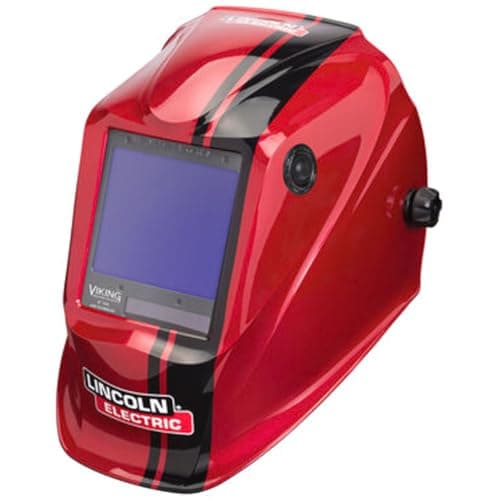 Lincoln Electric VIKING 3350Four sensors, 1/1/1/1 optics, a 2 A rating stated for both AC and DC and a 12.5 sq in window, with a five-year warranty. | Best overall | $556.55 · View on Amazon #ad How this is funded · Price as of November 28, 2026 |
| 2 | 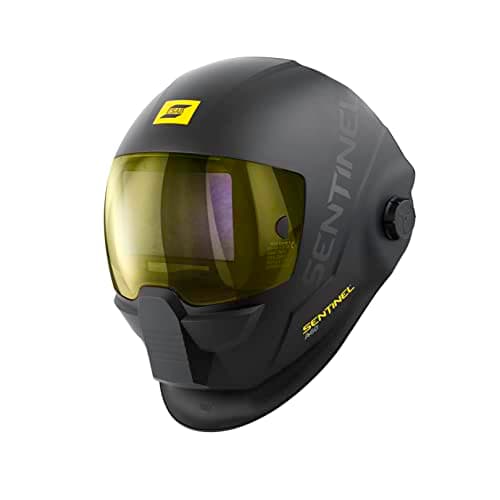 ESAB Sentinel A60The cheapest four-sensor helmet here, with 13.02 sq in of view, 0.5-step shade adjustment and nine memory settings. | Budget pick | |
| 3 | 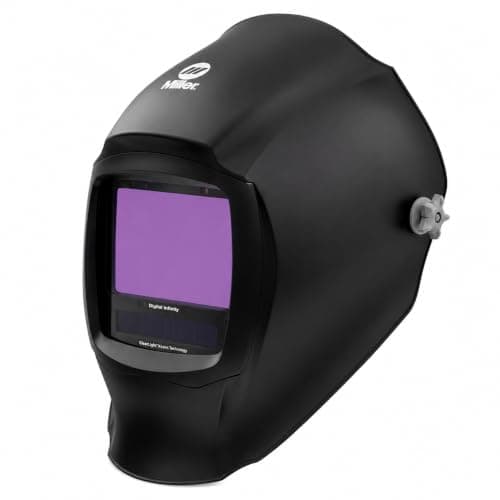 Miller Digital InfinityFour sensors plus X-Mode, which holds the lens dark through sensor blockage - the specific failure this page exists for. | Best for out-of-position work |
The short answer
Arc sensors are the small photocells around the lens cartridge that tell it to darken. More sensors means more angles from which the arc can be seen, which matters whenever something — your glove, the work, a fixture, the inside of a frame — stands between a sensor and the arc.
Our overall pick is the Lincoln Electric VIKING 3350: four sensors, 1/1/1/1 optics, a 2 A TIG rating stated for AC and DC, and a five-year warranty. The budget pick is the ESAB Sentinel A60, the cheapest four-sensor helmet in our registry, with the largest 0.5-step shade range here.
For out-of-position work specifically, the Miller Digital Infinity: four sensors plus X-Mode, which Miller publishes as holding the lens dark through sensor blockage.
Prices in the table above come from our live price feed, each with its own "as of" date inside the buy button. All three helmets returned a buyable offer in the refresh generated 2026-11-20.
What arc sensors do, and when two is not enough
An auto-darkening cartridge does not know you are welding. It knows that light of a particular character has hit a sensor, and it darkens in a fraction of a millisecond. If no sensor sees the arc, the lens stays clear — and you get the flash you will remember for the rest of the evening.
On a bench, welding away from yourself in open air, two sensors will see every arc you strike. The cases where they do not are specific and common:
Your own hand. Out-of-position welding often puts a glove between the lens and the arc. Tight corners and inside frames. A sensor can be shadowed by the workpiece itself. Overhead. The arc is below the sensor plane rather than in front of it. Fixtures and clamps. Anything between you and the arc blocks one line of sight.
Four sensors spread around the cartridge mean two can be blocked and the lens still reacts. That is the entire argument, and it is a safety argument rather than a comfort one.
What each one publishes
| Helmet | Sensors | Optical class | Published TIG rating | Viewing area | Shade range |
|---|---|---|---|---|---|
| Lincoln VIKING 3350 | 4 arc sensors | 1/1/1/1 | 2 A, stated for AC and DC | 12.5 sq in (95 x 85 mm) | Variable 5-13 |
| Miller Digital Infinity | 4 arc sensors, plus X-Mode electromagnetic detection | 1/1/1/2 (EN 379) | Down to 5 A (DC) | 13.4 sq in | Weld 8-13, cut 5-8, grind 2.5, X-Mode 8-13 |
| ESAB Sentinel A60 | 4 arc sensors | 1/1/1/1 | Down to 2 A (DC) | 13.02 sq in (118 x 71 mm) | 3/5-13 in 0.5 steps, with shade lock |
Sensor count is not the only safety specification - and the lens is never off.
A modern auto-darkening lens blocks ultraviolet and infrared radiation permanently, in both its light and dark states. The shade change protects you from visible brightness, not from UV. So a sensor that fails to trigger is a bright flash and real discomfort, not an instant burn — but repeated flashes are exactly how people end up with arc eye.
How to test an auto-darkening welding helmet is the five-minute check to run on any helmet, new or used, and the shade chart is what to set it to.
The specs that sit alongside sensor count
Optical class. Four digits for optical quality, diffusion, variation and angle-dependent uniformity, each from 1 (best) to 3. 1/1/1/1 is the top grade; the Miller publishes 1/1/1/2. The best auto-darkening welding lens decodes the whole string.
Minimum TIG rating. The lowest amperage at which the maker guarantees the lens triggers. Low-amp TIG makes very little light, so a 2 A rating is meaningfully better than 5 A if you weld thin material.
Switching speed. All three here publish 1/25,000 s, which is the current standard figure in this class.
Viewing area. Bigger is genuinely better for seeing the joint and your surroundings — the best large view welding helmets ranks on that axis alone.
Grind mode. All three have it. An external button beats a menu, because you use it constantly.
Which one is yours?
One helmet for everything, including AC TIG on aluminum: Lincoln VIKING 3350.
Four sensors for the least money: ESAB Sentinel A60.
Overhead, in-frame and out-of-position work: Miller Digital Infinity, for X-Mode.
You weld on a bench, in the open, at the same amperage: you may not need four sensors at all. The best welding helmets under $200 and the best welding helmets for the money are the pages for that, and the money saved is better spent on gas.
You are buying a first helmet: start at the best welding helmets for beginners. Sensor count is a second-helmet concern for most people.
How we picked these
Four published sensors, or not on the page. Exactly three helmets in our registry publish a four-sensor count, and all three are here. We did not count sensors from a product photograph, and helmets whose makers publish no sensor figure are absent rather than assumed.
Ranked on the specs that make the sensors useful. Optical class, TIG trigger rating and viewing area — four sensors on a lens you cannot see through is not a better helmet.
No hands-on, no scores. We have worn none of these three. More on the method on how we pick.
1. Best overall
Lincoln Electric VIKING 3350
Four sensors, 1/1/1/1 optics, a 2 A rating stated for both AC and DC and a 12.5 sq in window, with a five-year warranty.
Lincoln publishes the VIKING 3350 with a 12.5 sq in viewing area (a 95 x 85 mm cartridge), variable shade 5–13, 1/1/1/1 optical clarity, a TIG rating of 2 A stated for AC and DC, four arc sensors, a 1/25,000 s light-to-dark switching speed, the 4C lens with X6 headgear, a low-profile external grind button, one CR2450 with solar assist, a 22 oz weight and a five-year warranty.
It leads because every specification around the sensors is also strong. Four sensors on a helmet with a 2 A trigger rating and 1/1/1/1 optics is a coherent package: the sensors see the arc, the lens reacts to a tiny one, and what you look through afterwards is clear across the whole window.
The 2 A rating stated for AC as well as DC is the specification to notice. AC TIG on aluminum crosses zero a hundred times a second, and a lens with a low published AC rating is much less likely to flicker on it. Together with four sensors, that is the aluminum-TIG combination.
Against it: the most expensive helmet on this page. 22 oz is not light for long overhead sessions. And at shade 5–13 the light-state shade is a fixed 3.5, which some welders find darker than they want for moving around a shop.
What works
- 12.5 sq in of view at 1/1/1/1 clarity is the combination that makes a helmet stop being something you tolerate
- The external grind button means you switch modes without lifting the hood — the single feature you notice most every day
- Shade 5 low end covers plasma cutting, so one helmet spans all four levels
What does not
- Costs several times a budget auto-darkening helmet
- Physically large, and in a tight corner the shell finds things to bump into
2. Budget pick
ESAB Sentinel A60
The cheapest four-sensor helmet here, with 13.02 sq in of view, 0.5-step shade adjustment and nine memory settings.
ESAB publishes the Sentinel A60 with a 4.65 x 2.80 in (118 x 71 mm) viewing area totalling 13.02 sq in, shade 3/5–13 in 0.5-step increments with shade lock, 1/1/1/1 optical class, a DC TIG rating down to 2 A, four arc sensors, a 1/25,000 s light-to-dark switching speed with an adjustable 0.1–0.9 s dark-to-light delay, nine memory settings, an external grind button and the adjustable Halo headgear.
It is the budget pick in the strict sense: the cheapest helmet in our registry that publishes four arc sensors. It is also the largest window of the three and the only one with 0.5-step shade adjustment, which matters if you weld at a range of amperages and want the shade exactly right rather than one step too dark.
The adjustable dark-to-light delay is a genuinely useful control for tacking: a short delay clears the lens quickly between tacks, a longer one stops the strobing effect on repeated short arcs.
Against it: this ASIN went through a period with no buyable offer earlier in 2026 before returning at a lower price, so check the button rather than assuming stock. The Halo headgear divides opinion on fit. And the 2 A rating is published for DC only, not AC.
What works
- Published DC TIG rating down to 2 A — the one specification that decides whether a helmet is usable on thin stainless
- 13.02 sq in at a full 1/1/1/1 optical class, which is a combination almost nothing else offers
- Half-shade increments and shade lock let you settle on an exact shade rather than jumping between whole numbers
- External grind button, so switching modes does not mean lifting the hood and losing your torch position
What does not
- The most expensive helmet on this site apart from the Miller, and much of what it adds over a VIKING 3350 is refinement
- Nine memory settings is more configuration than a home shop running one or two processes will ever use
- Replaces the outgoing Sentinel A50, so older reviews and accessory guides may not match this shell
3. Best for out-of-position work
Miller Digital Infinity
Four sensors plus X-Mode, which holds the lens dark through sensor blockage - the specific failure this page exists for.
Miller publishes the Digital Infinity with a 13.4 sq in viewing area, the ClearLight 4X lens, a DC TIG rating down to 5 A, weld shade 8–13, cut 5–8, grind 2.5 and X-Mode 8–13, a shade 2.5 light state, a 1/25,000 s switching speed, 1/1/1/2 optical clarity to EN 379, four arc sensors, InfoTrack 2.0 arc time and arc count, a replaceable CR2450 with auto on/off, a 21.4 oz (606 g) weight, a four-year True Blue lens warranty, and a box including Legacy headgear, five outside cover lenses, two inside covers and a helmet bag.
X-Mode is the reason this is on the page. Miller publishes it as holding the lens dark through sensor blockage — an electromagnetic arc-detection mode rather than a purely optical one. Four sensors reduce the chance of blockage; X-Mode is what covers the case where they are all blocked anyway, which is exactly what happens welding inside a frame or overhead with your hand in front of the arc.
It is also the lightest of the three at 21.4 oz and the largest window at 13.4 sq in, and the box genuinely has what you need in it — seven cover lenses is a year of grinding for most people. Welding helmet lens covers explains why that matters more than it sounds.
Against it: the published TIG rating is 5 A, not 2 A, so for very low-amperage TIG the other two helmets here publish better figures. Its optical class is 1/1/1/2 rather than 1/1/1/1 — the last digit is uniformity across the lens. And InfoTrack is a feature almost no home welder uses twice.
What works
- 13.4 sq in is the largest view in this group, and on long fabrication work that is the difference you actually feel
- X-Mode holds the lens dark through sensor blockage — the fix for out-of-position welding where your hand covers a sensor
What does not
- The most expensive helmet on this site by a wide margin
- Everything it adds over a VIKING 3350 is a refinement, not a capability
- Rated to 5 A rather than the 2 A of the Lincoln and ESAB helmets, which matters on very thin stainless
Who this is wrong for: Low-amperage TIG under about 5 A, where the published trigger rating is the specification that decides the helmet, and the Lincoln and ESAB both publish 2 A.
Questions people actually ask
What is the best 4 sensor welding helmet?
Of the helmets in our registry, the Lincoln Electric VIKING 3350. Lincoln publishes four arc sensors, 1/1/1/1 optical clarity, a 12.5 sq in viewing area, variable shade 5-13, a 2 A TIG rating stated for both AC and DC, a 1/25,000 s switching speed and a five-year warranty.
The budget pick is the ESAB Sentinel A60, the cheapest four-sensor helmet in our registry, with a 13.02 sq in window and 0.5-step shade adjustment.
Do I need 4 sensors in a welding helmet?
If you weld out of position, inside frames or overhead, yes. Four sensors mean the lens still sees the arc when your hand, the work or a fixture blocks one or two lines of sight.
If all your welding is on a bench in open air, two sensors will see every arc you strike and the extra sensors are insurance rather than necessity.
What is the difference between a 2 sensor and 4 sensor welding helmet?
Only the number of angles from which the lens can detect an arc. Switching speed, optical class and shade range are separate specifications, and a good two-sensor helmet can out-spec a cheap four-sensor one on all of them.
Buy four sensors for the welding positions you actually work in, not because the number is higher.
Will a welding helmet lens fail to darken?
It can, if no sensor sees the arc - which is what sensor blockage means. The result is a bright flash rather than an instant injury, because the lens filters ultraviolet and infrared permanently in both states.
Repeated flashes are still how people get arc eye, which is why sensor count is a safety specification.
What does X-Mode do on a Miller welding helmet?
Miller publishes X-Mode as holding the lens dark through sensor blockage, by detecting the arc electromagnetically rather than only optically.
It addresses the exact failure case four sensors are meant to reduce: welding where your hand or the workpiece covers the sensors. It is the reason the Digital Infinity is our out-of-position pick.
Are 4 sensor welding helmets better for TIG?
They help, but the specification that matters most for TIG is the published minimum trigger amperage. Low-amperage TIG makes very little light, so a helmet rated down to 2 A is more useful than one rated to 5 A.
The Lincoln and the ESAB both publish 2 A; the Miller publishes 5 A.
Sources
- Lincoln Electric - VIKING 3350 published specifications: 12.5 sq in viewing area (95 x 85 mm cartridge), variable shade 5-13, 1/1/1/1 optical clarity, TIG rating 2 A stated for AC and DC, 4 arc sensors, 1/25,000 s light-to-dark switching, 4C lens with X6 headgear, low-profile external grind button, one CR2450 with solar assist, 22 oz, five-year warranty (registry entry, ASIN B07V9T5XQ1)
- ESAB - Sentinel A60 published specifications: 4.65 x 2.80 in (118 x 71 mm) viewing area totalling 13.02 sq in, shade 3/5-13 in 0.5-step increments with shade lock, 1/1/1/1 optical class, DC TIG rating down to 2 A, 4 arc sensors, 1/25,000 s light-to-dark and adjustable 0.1-0.9 s dark-to-light delay, 9 memory settings, external grind button, adjustable Halo headgear (registry entry, ASIN B0BLQ92744)
- Miller - Digital Infinity published specifications: 13.4 sq in viewing area, ClearLight 4X lens, DC TIG rating down to 5 A, weld shade 8-13 / cut 5-8 / grind 2.5 / X-Mode 8-13, shade 2.5 light state, 1/25,000 s switching, 1/1/1/2 optical clarity (EN 379), 4 arc sensors, X-Mode holding the lens dark through sensor blockage, InfoTrack 2.0, replaceable CR2450 with auto on/off, 21.4 oz (606 g), four-year True Blue lens warranty (registry entry, ASIN B0DC1V62WG)
- Arc & Bead live price layer (lib/prices.ts) - a buyable offer and live price for all three helmets confirmed against the price feed generated 2026-11-20; the ESAB Sentinel A60 returned no offer in the 2026-11-13 refresh and returned at $299.00 on 2026-11-20, which is why the page tells you to check the button
Read next
- The best professional grade auto-darkening welding helmets
Professional grade means four published specifications, not a price band. Three helmets that state all four.
- The best large view welding helmets
Four welding helmets ranked on published viewing area in square inches, with optical class read alongside it and the cheapest panoramic helmet in our registry named as the budget pick.
- The best auto-darkening welding lens, and how to read the specs
The cartridge is the helmet. Optical class, switching speed, sensors and trigger amperage, explained.
- The best welding helmets under $200
Three auto-darkening helmets under $200 on live prices, ranked on published optical class, shade range and TIG rating, with the cheapest large-view helmet named as the budget pick.
- How to Test an Auto-Darkening Welding Helmet
The test button, the sunlight check and the scrap-metal check — plus why the UV and IR protection does not depend on the lens darkening.
- Welding helmet shade chart
OSHA's minimum protective shades by process and arc current, and how to use them in practice.
Back to Helmets & PPE, or start over at Find Your Level.
Ryder M.
Ryder M. is the hands-on owner behind Magoo Media Group. He writes Arc & Bead's buying guides and picks every machine on the site. What every recommendation is based on — and what it is not based on — is set out on How We Pick.