The best welders for motorcycle frames
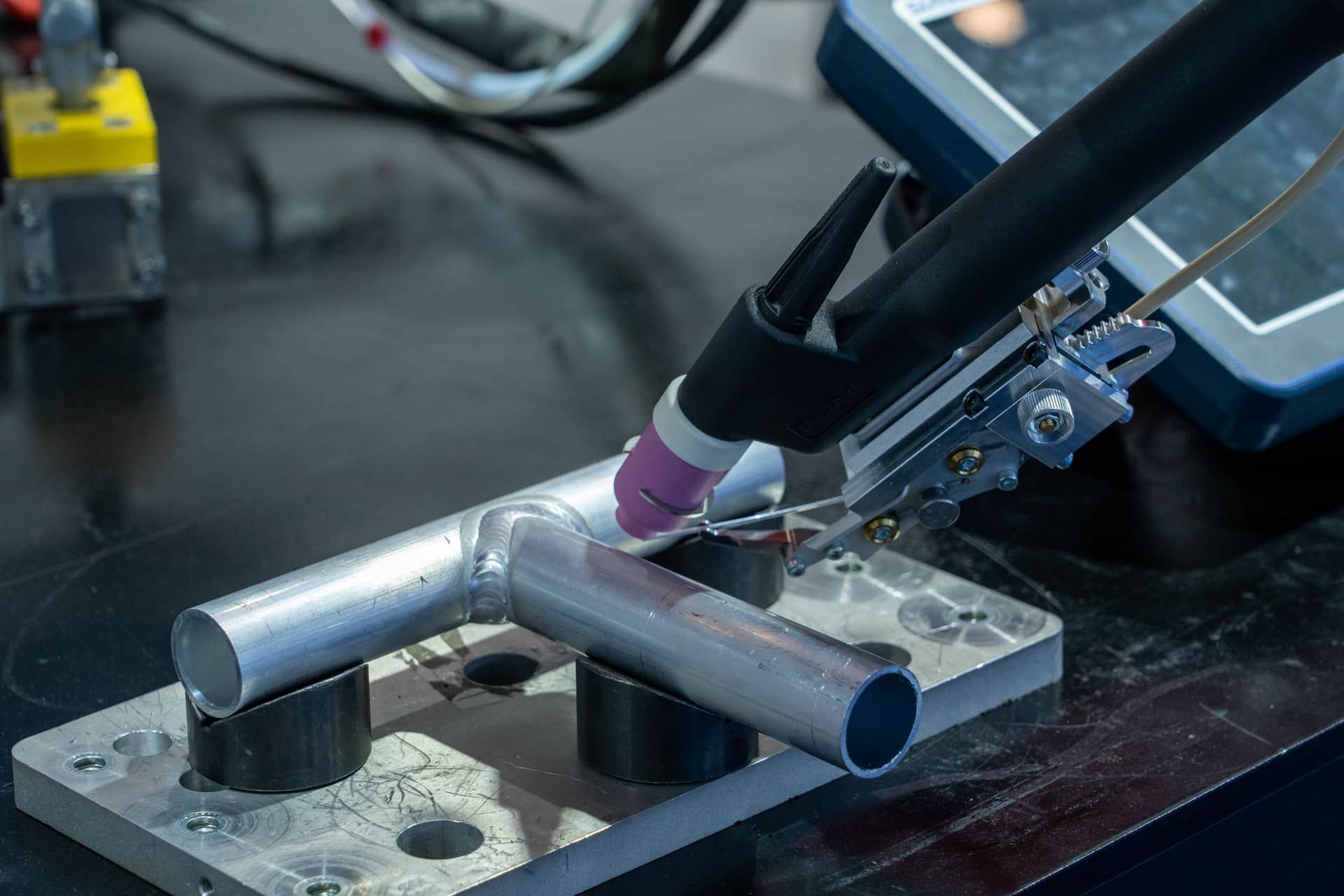
Tube frames are thin-wall, load-bearing and welded in positions you cannot reach twice. That narrows the machine choice a long way.
Arc & Bead is an Amazon Associate. If you buy through a link on this page we may earn a commission, at no extra cost to you. We have not physically tested the machines on this page and we say so on How We Pick.
Quick picks
Tap any row to jump to the full write-up further down this page.
| # | Product | Best for | Price |
|---|---|---|---|
| 1 | 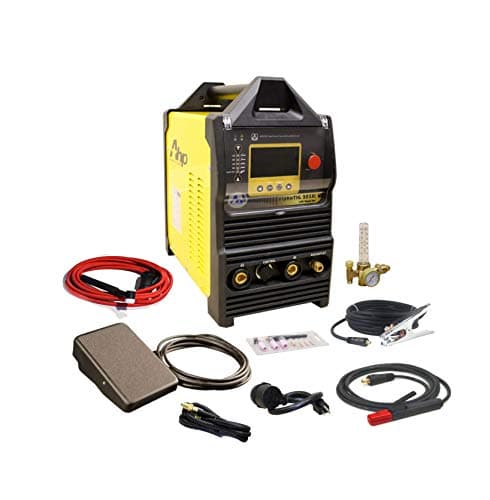 AHP AlphaTIG 200XTIG from 10 A with a foot pedal, which is the only way to modulate heat through a tube joint. | Best overall for frames | $689.00 · View on Amazon #ad How this is funded · Price as of November 13, 2026 |
| 2 | 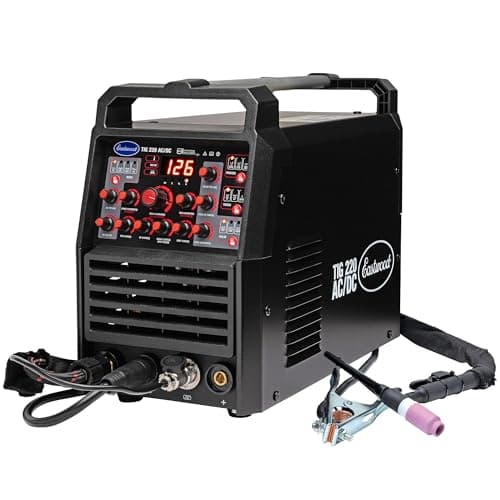 Eastwood TIG 220 AC/DCA flex-head torch on a twelve-foot lead with the gas lens fitted, which is what gets you into a frame cluster. | Best torch and reach | $1,019.99 · View on Amazon #ad How this is funded · Price as of November 13, 2026 |
| 3 | 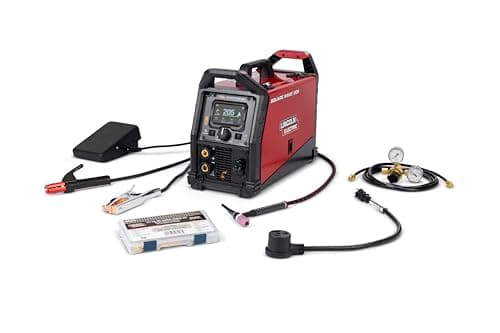 Lincoln Electric Square Wave 205AC/DC TIG to 205 A from a manufacturer with a dealer network and parts behind it. | Best supported | $1,598.99 · View on Amazon #ad How this is funded · Price as of November 13, 2026 |
| 4 | 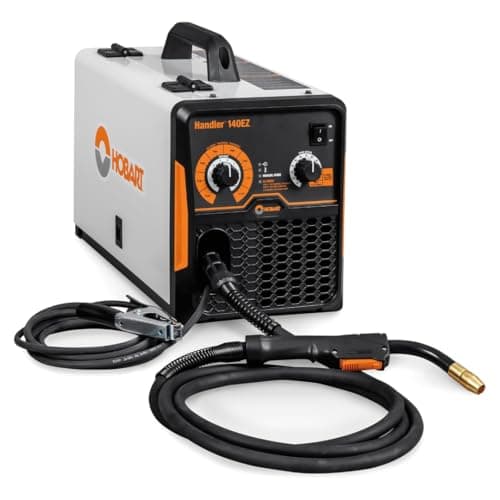 Hobart Handler 140EZA 30 A bottom end with gas — the honest wire option for mild steel tube, with real caveats. | Best wire machine for tube | $720.00 · View on Amazon #ad How this is funded · Price as of November 13, 2026 |
What welder do you need for a motorcycle frame?
An AC/DC TIG machine with a foot pedal and an output range starting around 10 amps. Frame tube is thin-wall — typically 0.065 to 0.120 inch — load-bearing, and welded in positions you cannot easily reach twice, so low-amperage control and the ability to modulate heat mid-weld matter more than output. Gas MIG with 0.023 inch wire is a workable alternative on mild steel tube, but not on chromoly.
Tube frames are their own problem, and the reasons are worth separating out because each one points at a different specification.
The wall is thin. Frame tube is usually 0.065 to 0.120 inch — thinner than the plate most home welding deals with. Current that would be conservative on 1/8-inch flat bar blows through it, so the machine's minimum output is the figure that matters and the maximum is nearly irrelevant.
The heat demand changes continuously. Going around a tube intersection you pass from a thick cluster to an unsupported thin wall. One fixed setting is wrong for part of every joint. A foot pedal is the only tool that solves this, and it is the main reason TIG dominates this work.
The joints are load-bearing. A frame carries a rider over bumps, in traffic, with fatigue cycles rather than static load. That is a different standard from a shelf bracket.
Access is bad and distortion is cumulative. A frame is a closed structure in a jig. Heat put in on one side pulls the geometry, and you cannot un-weld a joint to fix the alignment. Lower heat input and the ability to tack a whole frame before welding anything out are both worth paying for.
Mild steel versus chromoly — read this before you buy
A great deal of frame tube is 4130 chromoly, and it is not simply "stronger mild steel". It is a low-alloy steel with real heat treatment behavior: welded and then cooled quickly, the heat-affected zone can become hard and brittle, and a brittle zone next to a weld on a fatigue-loaded structure is the failure mode nobody wants.
The accepted practice is TIG with a matched filler, controlled heat input, and either slow cooling or post-weld stress relief depending on the application and the governing standard. That is beyond the scope of a buying page, and it is the honest reason we recommend TIG over MIG for frames rather than treating them as equivalent.
If the tube is plain mild steel — which a lot of custom work on older bikes is — the picture is much more relaxed and gas MIG is a reasonable choice. Know which you have before you start, and if you do not know, treat it as chromoly.
Frame welding is a structural job, and we are not going to pretend otherwise
A motorcycle frame carries a person at speed. Steering head mounts, swingarm pivots, engine mounts, backbone and downtube joints are all load paths where a failure is a crash rather than an inconvenience.
Brackets, luggage racks, sissy bars, tabs, exhaust hangers and cosmetic work are excellent practice and entirely reasonable first projects. Primary structure is work to approach after real practice on scrap tube of the same wall thickness, with the geometry jigged, and with someone competent looking at it — and in many places frame modification has legal and insurance consequences as well as mechanical ones.
This page helps you choose a machine. It is not a substitute for knowing whether you should be doing the weld.
The published numbers, side by side
| Machine | Processes | Output | Input | Torch | Duty cycle |
|---|---|---|---|---|---|
| AHP AlphaTIG 200X | AC/DC TIG, stick | 10–200 A TIG | 110 V or 220 V | — | 60% at 200 A TIG |
| Eastwood TIG 220 AC/DC | AC/DC TIG, stick | 10–220 A on 240 V (10–140 A on 120 V) | 120 V or 240 V | WP-17F flex-head, gas lens fitted | AC TIG 40% at 220 A; 60% at 179 A |
| Lincoln Square Wave 205 | AC/DC TIG, pulsed TIG, stick | 8–205 A on 230 V (8–125 A on 120 V) | 120 V or 230 V | Caliber 17 (included) | 25% at 200 A |
| Hobart Handler 140EZ | Gas MIG, flux-core | 30–140 A | 115 V, 20 A circuit | — | 30% at 90 A |
Why the foot pedal keeps coming up
Because it is the only control that acts during the weld. Every other setting on a welding machine is chosen before you strike the arc and fixed until you stop.
On a tube joint that is a problem with no workaround. The fishmouth where two tubes meet has a thick root at the sides and an unsupported thin edge at the top of the cope, and the correct current is different at each. With a pedal you ramp up into the thick section and feather off as the wall thins, all in one continuous bead. Without one you either run cold at the root or burn through the thin edge, and most people do both on the same joint.
A pedal is also how you finish a weld properly on thin tube — tapering the current down rather than stopping abruptly, which avoids the crater crack that forms when a hot puddle is abandoned. The TIG settings chart has starting amperage figures by thickness.
Which one to buy
AHP AlphaTIG 200X for most frame work. A 10 amp floor, a pedal, AC for aluminum, and the published capacity range covers tube and everything around it.
Eastwood TIG 220 AC/DC if access is your constraint. The flex-head torch, its twelve-foot lead and the gas lens already on it are the difference between reaching a cluster and nearly reaching it, and they are included rather than a later upgrade.
Lincoln Square Wave 205 if a long build with the bike apart makes dealer support and parts availability worth a premium.
Hobart Handler 140EZ if the tube is mild steel, the joints are not primary structure, and you would rather have speed and a short learning curve than heat modulation.
TIG welders for beginners covers the learning curve honestly, and TIG welding for beginners is the place to start if this would be your first TIG machine. For a go-kart or buggy frame the requirements are nearly identical — thin-wall tube, load-bearing, awkward access — so this is the page for those too.
1. Best overall for frames
AHP AlphaTIG 200X
TIG from 10 A with a foot pedal, which is the only way to modulate heat through a tube joint.
AHP publishes AC/DC TIG and stick, 110 V or 220 V single-phase input, 10 to 200 amps TIG, a 60% duty cycle at 200 amps TIG and 35% at 155 amps stick, a mild steel capacity of 24 gauge to 3/8 inch, aluminum to 1/4 inch, AC balance from 30 to 70%, and 50 pounds.
Two specifications make this the frame pick. The 10 amp bottom end, which matters because thin-wall tube at 0.065 to 0.120 inch wall wants genuinely low current and most wire machines cannot go there. And the foot pedal, which is the part people do not appreciate until they have used one.
A tube joint is a continuously changing heat problem. Going around a cluster you move from a thick intersection to an unsupported thin wall to an overlap, and a wire machine gives you one fixed setting for all of it. A pedal lets you add heat where the metal takes it and back off where it would blow through — mid-weld, without stopping. On frames that is not a refinement; it is the technique.
TIG also gives you a weld you can inspect. The bead is visible, the fusion line is visible, and the heat-affected zone is narrow and controlled — all of which matter on a joint that carries a rider.
What works
- AC output is what makes aluminum possible at all — this is the cheapest widely supported machine that has it
- 60% duty cycle at 200 A is a genuinely high rating for the price
- Adjustable AC balance lets you trade cleaning action against penetration instead of accepting one compromise
What does not
- The bundled torch and consumables are the first thing most owners replace
- The manual is thin. Budget time for learning the machine as well as the process
- 50 lb and a foot pedal means it lives in one place
2. Best torch and reach
Eastwood TIG 220 AC/DC
A flex-head torch on a twelve-foot lead with the gas lens fitted, which is what gets you into a frame cluster.
Eastwood publishes AC/DC TIG and stick, 120 V or 240 V single-phase input, TIG output of 10 to 220 amps on 240 V and 10 to 140 amps on 120 V, an AC TIG duty cycle of 40% at the full 220 and 60% at 179, capacity to 1/4 inch, and — the reason it is here — a WP-17F flex-head torch on a twelve-foot lead with the gas-lens collet body, collet and number 8 cup already fitted.
Torch quality is the single most under-rated specification in TIG, and it is at its most important on frames. A frame cluster is a confined space surrounded by tube you cannot move. A flex-head torch bends to the angle the joint needs rather than the angle your wrist allows, and a twelve-foot lead does not run out when you are holding a position at arm's length under a frame jig.
The gas lens matters as much on tube as the flexible head does. Most machines in this price range ship a plain collet body, and fitting a gas-lens kit is the first upgrade owners make — a real cost that never appears in the comparison. On a cope joint, where the torch sits at an angle and the shielding gas has further to travel, it is the part that keeps the weld bright.
The published output is also the highest on the page at 220 amps on 240 volts, and the 40% duty cycle at that figure is honest. Neither matters much for tube, but both mean the machine is not only a frame machine.
What works
- It publishes both supply figures — 10 to 220 A on 240 V and 10 to 140 A on 120 V — so you can size the circuit before you buy instead of after
- Adjustable AC balance and AC frequency plus pulse frequency, peak on-time and base current: the controls that actually change how aluminum behaves
- Flex-head torch with a gas-lens kit, foot pedal, argon regulator/flowmeter and ground clamp are all in the box. Only the gas bottle is extra
- 22.93 lb. Almost nothing else in the AC/DC class is light enough to carry to the work rather than the other way round
What does not
- The 40% duty cycle applies at the full 220 A in AC TIG; the 60% figure is at 179 A. The AlphaTIG publishes 60% at 200 A
- The bundled torch is a WP-17 pattern — widely supported and cheap on consumables, but not a branded premium torch
- Full output needs the 240 V circuit. On 120 V Eastwood publishes 140 A in TIG and 120 A in stick, roughly two-thirds of the machine
- Eastwood publishes one 1/4 in capacity figure for the machine rather than separate steel and aluminum numbers, so there is less to compare on than some rivals give you
3. Best supported
Lincoln Electric Square Wave 205
AC/DC TIG to 205 A from a manufacturer with a dealer network and parts behind it.
Lincoln publishes AC/DC TIG, pulsed TIG and stick; 120 V or 230 V input; TIG 8 to 205 amps on 230 V and 8 to 125 amps on 120 V; and a 200 amp rating at a 25% duty cycle.
The arc controls are not the argument here, though they are good — adjustable pulse, AC frequency and AC balance are all published. The argument is that when a torch switch fails or a gas valve leaks halfway through a frame build, there is a dealer network, a parts catalogue and a manual that matches the machine in front of you.
That matters more on a long project than on a weekend job. A frame build is weeks of work with the bike apart, and a machine out of action for a month waiting on an overseas part is a genuine cost.
Dual voltage at 120 V or 230 V also means it can run in a garage before the 240 V circuit exists, at reduced output. For thin tube that reduction costs you very little — the 120 V ceiling is 125 amps and you are working at 60 to 120 amps either way.
What works
- Lincoln's dealer and service network is the best in the category if something goes wrong
- A Foot Amptrol, torch, regulator and lead set all ship in the box, so the ticket price is close to the real cost of welding
- Adjustable pulse, AC frequency and AC balance — the three controls that actually change how aluminum behaves
What does not
- Costs substantially more than the AlphaTIG or the Eastwood for comparable output
- On a 120 V circuit TIG output is capped at 125 A, so the 205 A headline is the 230 V figure
4. Best wire machine for tube
Hobart Handler 140EZ
A 30 A bottom end with gas — the honest wire option for mild steel tube, with real caveats.
Hobart publishes gas MIG and flux-core, 115 V on a 20 amp dedicated circuit, 30 to 140 amps, and a 30% duty cycle at 90 amps.
MIG on tube frames is genuinely done and it is worth being straight about where it works. For mild steel tube — a hardtail section, a sissy bar, a luggage rack, a sidecar mount, a custom subframe — gas MIG with 0.023 or 0.030-inch wire at the low end of this machine's range makes a sound weld, and it is far faster and far easier to learn than TIG.
The 30 amp floor is what makes it viable. Thin-wall tube wants low current, and most 120 V machines will not go low enough to avoid blowing through a 0.065-inch wall.
Two caveats, and they are real. MIG puts more heat into the joint than TIG, so distortion on a jigged frame is harder to control. And you cannot modulate heat mid-weld — one setting goes all the way round the joint, which is the thing a pedal exists to solve. For chromoly specifically, see the warning below; this is a mild steel recommendation.
What works
- The most documented 120 V MIG family there is — every settings question has already been answered somewhere
- Runs flux-core on day one and gas MIG the day you buy a bottle, so the machine survives the level change
- EZ Mode sets the machine from two turns of a knob, and infinite voltage control is still there when you want to override it
- Spool-gun ready, so aluminum is a gun purchase rather than a new machine
What does not
- 3/16 in is the published capacity. A trailer deck in one sitting is beyond it
- Single-voltage: it will never take advantage of a 240 V circuit if you later run one
- 53 lb is heavy for a 120 V machine — it wants a cart rather than a shelf
Who this is wrong for: Chromoly tube, and any joint where distortion across a jigged frame has to be controlled precisely.
Questions people actually ask
Can you MIG weld a motorcycle frame?
On mild steel tube, yes - gas MIG with 0.023 or 0.030 inch wire at low amperage makes a sound weld, and plenty of custom work on older bikes is done that way.
On 4130 chromoly it is not the right process. Chromoly's heat-affected zone can become hard and brittle, and the accepted practice is TIG with a matched filler and controlled heat input.
Why is TIG preferred for tube frames?
The foot pedal. A tube joint needs different current at different points - a thick cluster at the sides, an unsupported thin wall at the top of the cope - and a pedal lets you change it mid-weld.
Every other setting on a welder is fixed before you strike the arc. On thin-wall tube that is the difference between a cold root and a blown-through edge.
What amperage for welding thin-wall tube?
Low - typically well under 100 amps for 0.065 to 0.120 inch wall, which is why a machine's minimum output matters far more than its maximum here.
A TIG machine starting at 10 amps gives you the whole usable range. Our TIG settings chart has starting figures by thickness.
Is it safe to weld your own motorcycle frame?
Brackets, racks, sissy bars, tabs and exhaust hangers are reasonable projects. Primary structure - steering head, swingarm pivot, engine mounts, backbone and downtube joints - carries a rider at speed under fatigue loading.
That is work to approach after real practice on scrap tube of the same wall thickness, with the frame jigged and someone competent reviewing it. In many places frame modification also has legal and insurance consequences.
What is the best welder for a go-kart frame?
The same machines as for a motorcycle frame. The requirements are nearly identical: thin-wall tube, load-bearing joints, awkward access and continuously changing heat demand around each cluster.
An AC/DC TIG machine with a foot pedal and a low amperage floor is the right tool, and mild steel tube can be gas MIG welded if the joints are not primary structure.
Sources
- AHP — AlphaTIG 200X published specifications: 10–200 A TIG, 60% at 200 A, AC balance 30–70%
- Eastwood — TIG 220 AC/DC (SKU 74010) published specification table: TIG 10–220 A on 240 V and 10–140 A on 120 V, AC TIG duty cycle 40% at 220 A and 60% at 179 A, high-frequency start, 22.93 lb
- Eastwood — TIG 220 AC/DC published box contents: flex-head WP-17F torch and cable assembly, 12 ft, with gas-lens collet body, collet and #8 cup fitted; foot pedal on a 16 ft cable; argon regulator/flowmeter
- Lincoln Electric — Square Wave 205 (K5613-1) published specifications: AC/DC and pulsed TIG, stick, 120/230 V, TIG 8–205 A on 230 V and 8–125 A on 120 V, 200 A at 25%
- Hobart — Handler 140EZ published specifications: 30–140 A, 115 V
- American Welding Society — D1.1 and low-alloy steel guidance on heat input and heat-affected zone behavior
Read next
- The best TIG welders for beginners
AC/DC machines for a first TIG setup, and why the bundled torch matters as much as the welder.
- TIG welding for beginners
Torch angle, arc length, feeding rod — the order to learn TIG in so it stops feeling impossible.
- TIG welding settings chart
Amperage, tungsten and filler size by metal and thickness, plus symptom-by-symptom diagnosis.
- The best welders for 1/4 inch steel
Quarter-inch steel is where 120V machines run out. Four with the published capacity, ranked.
- The best welders for exhaust pipe
Exhaust tube is 16-gauge wall and burns through easily. The machines with a low enough minimum to weld it.
- Find your level before you spend a penny
Most bad first welder purchases are not bad machines. They are the right machine bought by the wrong person, one level too early or one level too late.
Back to Find Your Level, or start over at Find Your Level.
Ryder M.
Ryder M. is the hands-on owner behind Magoo Media Group. He writes Arc & Bead's buying guides and picks every machine on the site. What every recommendation is based on — and what it is not based on — is set out on How We Pick.