Best welding helmets for flux-core welding
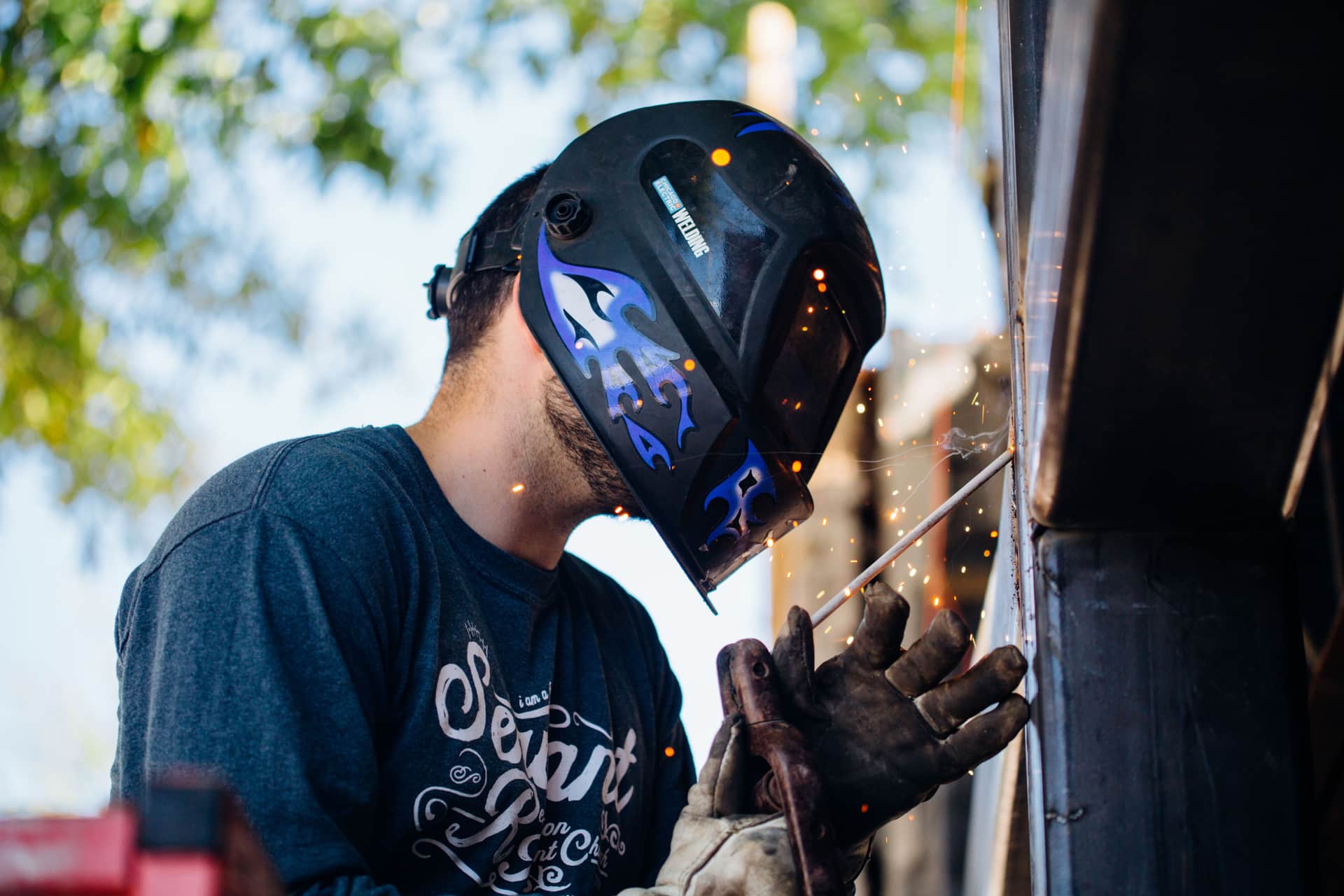
The first helmet most people buy is for the first process most people run — and flux-core asks for different things than the spec sheets emphasise.
Arc & Bead is an Amazon Associate. If you buy through a link on this page we may earn a commission, at no extra cost to you. We have not physically tested the machines on this page and we say so on How We Pick.
Quick picks
Tap any row to jump to the full write-up further down this page.
| # | Product | Best for | Price |
|---|---|---|---|
| 1 | 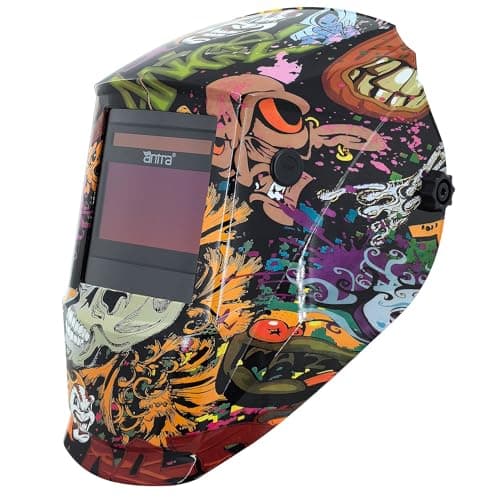 Antra DP3-6404A published 2-amp rating and ANSI Z87.1 at a price where neither is normal — and a cheap shell to sacrifice to spatter. | Best overall for flux-core | $69.95 · View on Amazon #ad How this is funded · Price as of November 13, 2026 |
| 2 | 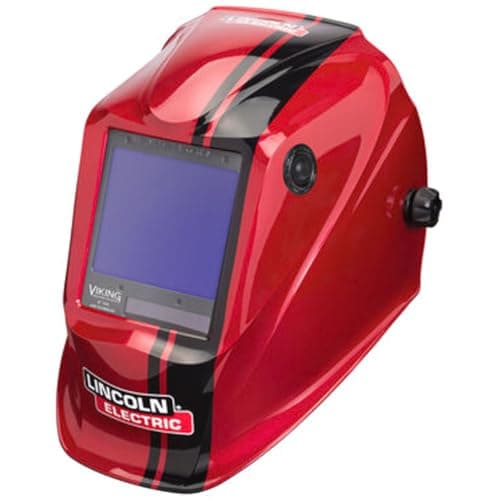 Lincoln Electric VIKING 335012.5 sq in at a full 1/1/1/1 with a shade 5 low end and an external grind button — one helmet for all four levels. | Best if flux-core is not the end of the plan | $556.55 · View on Amazon #ad How this is funded · Price as of November 13, 2026 |
| 3 | 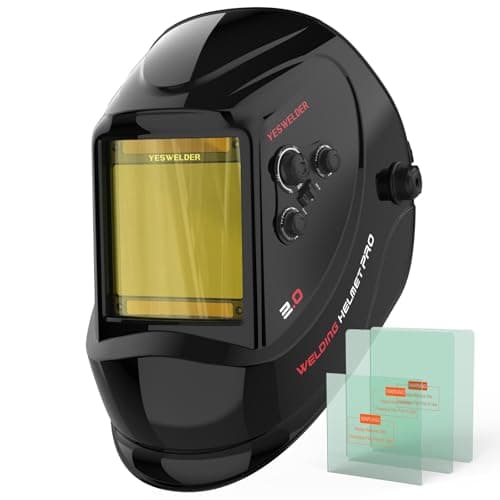 YESWELDER LYG-M800H large-view helmetA panoramic true-color lens and a deep shell that takes prescription glasses, at a fraction of a name-brand large-view price. | Best large view on a budget | |
| 4 | 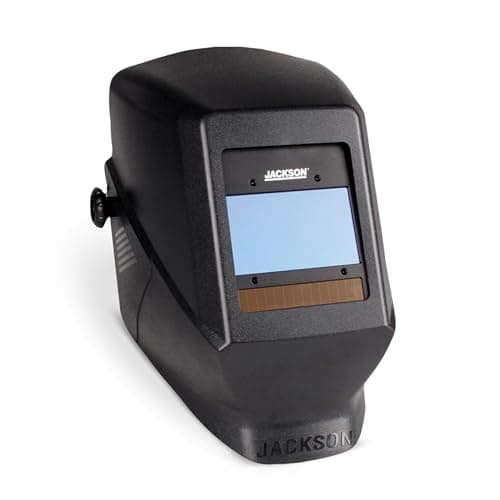 Jackson Safety Insight VariableLight on the neck, ANSI Z87.1 rated, with shells and headgear parts that are easy to source separately. | Best for long sessions | $203.99 · View on Amazon #ad How this is funded · Price as of November 13, 2026 |
The short answer
The best welding helmet for flux-core is the Antra DP3-6404: a published 2-amp trigger rating, a shade lock and an ANSI Z87.1 rating at a price where none of the three is the norm, and cheap enough that you do not mind spatter hitting it. If flux-core is a stepping stone rather than a destination, the Lincoln VIKING 3350 and its external grind button is the helmet that will still be right at every level above.
Flux-core is the first process most home welders run, which makes this the first helmet most people buy — and the advice they find is written for either the cheapest possible hood or for TIG. Neither is right. Flux-core asks for three specific things, and only one of them appears prominently on a spec sheet.
Published specifications, side by side
| Helmet | Viewing area | Optical class | Sensors | Shade range | Grind mode |
|---|---|---|---|---|---|
| Antra DP3-6404 | Not published | Not published | Not published | 3/5–13 with shade lock | Quick grind button |
| Lincoln VIKING 3350 | 12.5 sq in | 1/1/1/1 | Not published | Variable 5–13 | External grind button |
| YESWELDER LYG-M800H | Panoramic true-color | Not published | Not published | Variable | Light-state grind mode |
| Jackson Safety Insight Variable | Not published | Not published | Not published | Variable | Yes |
Three of the four do not publish an optical class. That is worth reading as information rather than skipping: at the budget end of the helmet market, clarity is the specification most often left unclaimed, and an absent figure reads as neutral when it should read as a warning. The auto-darkening lens guide takes the four digits apart.
What flux-core asks for that other processes do not
1. Sensor count, because of where flux-core is used. Flux-core needs no gas bottle, which is exactly why it ends up being the process for jobs away from a clean bench: under a trailer, inside a frame, on a gate still hanging on its post. All of those put something between the arc and the front of your helmet, and a blocked sensor is a lens that flickers back to light while you are welding. Four sensors is available even at the entry end, which makes it the one specification worth insisting on at any price.
2. A cover lens you will replace often and cheaply. Flux-core throws spatter. Not occasionally — continuously, as a property of the process, which is why flux-core welding spatter is a page of its own. That spatter lands on the clear plastic cover lens in front of the cartridge, and a pitted cover lens is the single most common cause of "my helmet has lost its clarity". What you want is a helmet whose cover lenses are cheap and stocked — see welding helmet lens covers.
3. A shade range centered where flux-core runs, not where TIG does. A 120-volt flux-core machine works between roughly 90 and 140 amps. OSHA's Table I-5 sets minimum protective shades by process and current, and at that range you are comfortably within what every helmet here covers. What you do not need to pay for is the low-amperage trigger rating that dominates TIG helmet marketing — a 2 amp DC TIG rating is irrelevant on an arc that never goes near 2 amps.
The specification not to pay for
Minimum TIG trigger amperage is the figure our TIG helmet page is organized entirely around, and it is the right priority there. On flux-core it buys you nothing. If a helmet is being sold to you on a 2 amp rating and you weld at 110 amps, you are paying for capability you cannot use.
Why the cheapest helmet is a defensible first helmet here
This is not an argument for buying badly. ANSI Z87.1 is a genuine line, and a hood without it is a novelty rather than eye protection. Both of the budget picks here are rated to it.
The argument is about sequence. Flux-core is Level 1 — the first rung — and at Level 1 two things are true at once: you do not yet know whether you will still be welding in a year, and the process you are running is the one hardest on the front of a helmet. A helmet cheap enough to be sacrificial, with four sensors and a real safety rating, is the honest answer to both.
The counter-case is equally honest, and it is the VIKING 3350. If you already know you are going on to gas MIG and eventually TIG or plasma, buying once costs less than buying twice, and the external grind button is a feature you will use every session for years.
How we ranked these
Sensor count first, because of where flux-core work happens.
Published safety rating as a gate. ANSI Z87.1 or it is not on the list.
Cover-lens availability and cost, because that is what decides whether the helmet still feels good in six months.
Nothing credited to a figure that is not published. Three of these four do not state an optical class, and the table says so rather than implying one. Our how we pick page sets out the method, including the fact that we have tested none of these helmets and publish no scores.
1. Best overall for flux-core
Antra DP3-6404
A published 2-amp rating and ANSI Z87.1 at a price where neither is normal — and a cheap shell to sacrifice to spatter.
Antra publishes a true-color lens with a 3/5 to 13 shade range and a shade lock, a DC TIG rating down to 2 amps, tack, weld and cut memory presets, a quick grind button, ANSI Z87.1 compliance, and solar power with battery backup.
The shade lock is the specification that puts it first on a flux-core page specifically. Self-shielded flux-core is run most often on repairs and fabrication where the work is not on a clean open bench — inside a frame, under a trailer, with your own hand between the arc and the front of the hood. A lens that keeps re-reading a partly obscured arc hunts between shades on exactly those jobs; locking the shade stops it.
The second reason is less flattering and just as practical. Flux-core throws spatter at the front of your helmet continuously, and the shell and cover lens take it. A helmet cheap enough that you do not mind it getting peppered is the right first helmet, and this is that helmet at a specification that still clears the real safety bar.
The headgear is the known weak point and the part owners most often replace. The optical class is not published as 1/1/1/1, and over a long session you can feel the difference — it is a reason to upgrade later, not a reason to buy something else now.
What works
- A published 2 A TIG rating at the bottom of the market, where the usual answer is no rating at all
- Shade 5 low end covers plasma cutting, so one cheap helmet spans more than MIG
- Quick grind/weld button and shade lock — two things that are normally the first upgrade
- Cheap enough that starting here and upgrading later costs less than agonizing over it
What does not
- Antra does not publish a 1/1/1/1 optical class for it, and over a long session you can feel the difference
- Headgear is the weak point on budget helmets generally, and this one is no exception
- A small shell: next to a VIKING 3350 the view is noticeably tighter
Who this is wrong for: Low-amperage TIG. The switching speed is adequate for MIG, flux-core and stick, and this is not a TIG helmet.
2. Best if flux-core is not the end of the plan
Lincoln Electric VIKING 3350
12.5 sq in at a full 1/1/1/1 with a shade 5 low end and an external grind button — one helmet for all four levels.
Lincoln publishes 12.5 square inches of viewing area, a full 1/1/1/1 optical class, the 4C lens with X6 headgear, a variable shade 5 to 13 range and a low-profile external grind button.
On a flux-core page the external grind button is the feature that earns its keep daily. Flux-core leaves slag and spatter, so you grind constantly — and switching to grind mode without lifting the hood means you never lose your position on the work. Of everything on this spec sheet, that is the one you notice every single session.
The shade 5 low end matters for a different reason: it covers plasma cutting as well as welding, so if your path runs from flux-core up through MIG and eventually to plasma, this is the one helmet that spans the whole ladder. The welding helmet shade chart sets out why the low end differs by process.
It costs several times a budget auto-darkening helmet, and the shell is physically large — in a tight corner it finds things to bump into, which is a real consideration on exactly the under-and-inside work flux-core is used for.
What works
- 12.5 sq in of view at 1/1/1/1 clarity is the combination that makes a helmet stop being something you tolerate
- The external grind button means you switch modes without lifting the hood — the single feature you notice most every day
- Shade 5 low end covers plasma cutting, so one helmet spans all four levels
What does not
- Costs several times a budget auto-darkening helmet
- Physically large, and in a tight corner the shell finds things to bump into
3. Best large view on a budget
YESWELDER LYG-M800H large-view helmet
A panoramic true-color lens and a deep shell that takes prescription glasses, at a fraction of a name-brand large-view price.
YESWELDER publishes a true-color panoramic lens, a variable shade range with a light-state grind mode, and solar power with a replaceable battery. The deep shell accommodates most prescription glasses without pressure on the temples.
A large view earns its place on flux-core work because of where that work happens. Following a joint under a trailer or along a gate frame means seeing where the seam runs ahead of the puddle without moving your head, and a small window makes you move your head — which moves the gun.
The true-color lens also helps with a flux-core-specific problem: reading a puddle through the slag that forms over it. A green lens flattens that contrast; a true-color one keeps more of it.
The honest caveat is that published optical-class figures are inconsistent between listings for this helmet, so treat unstated clarity as unverified rather than as good. Headgear adjustment is also coarse next to an X6 or Halo system.
What works
- Panoramic view at a fraction of a name-brand large-view helmet's price
- True-color lens makes the puddle and the weld pool edge much easier to read than a green lens
- Deep shell accommodates most prescription glasses without pressure on the temples
What does not
- Published optical-class figures are inconsistent between listings — treat unstated clarity as unverified
- Headgear adjustment is coarse compared with the X6 or Halo systems
4. Best for long sessions
Jackson Safety Insight Variable
Light on the neck, ANSI Z87.1 rated, with shells and headgear parts that are easy to source separately.
Jackson publishes this as a variable-shade auto-darkening helmet with a grind mode, rated to ANSI Z87.1. Jackson's shells and headgear parts are straightforward to buy separately, which matters on a process that peppers the front of a helmet.
Weight is the reason it is here. The complaint that actually ends a long session is neck fatigue, not optics — and flux-core sessions run long because the process is used for repair and fabrication work rather than for short precision welds.
The viewing area is small next to a VIKING 3350 or a panoramic helmet, and it is not a low-amperage TIG helmet. On flux-core at 90 to 140 amps, neither of those is the constraint you will hit.
What works
- Light on the neck, which is the complaint that actually ends a long session
- Jackson's shells and headgear parts are easy to source separately
What does not
- Viewing area is small next to a VIKING 3350 or a panoramic helmet
- Not a low-amperage TIG helmet
Who this is wrong for: Anyone who wants a large view, and anyone heading to TIG. It is a comfortable helmet for bench-height MIG and flux-core, not a do-everything one.
Questions people actually ask
What welding helmet is best for flux-core welding?
The Antra DP3-6404, on published specifications: a DC TIG rating down to 2 amps, a 3/5 to 13 shade range with a shade lock, a quick grind button and ANSI Z87.1 compliance, at a price where none of those figures is usually published at all.
The shade lock matters on flux-core because the work is often done inside a frame or under something, where a partly obscured arc makes a budget lens hunt between shades.
What shade do you use for flux-core welding?
Follow OSHA 29 CFR 1910.133 Table I-5, which sets minimum protective shades by process and current. A 120-volt flux-core machine runs roughly 90 to 140 amps, which sits comfortably within the range every helmet on this page covers.
In practice most welders run a shade in the 10 to 12 region at those currents and adjust for comfort within what the table permits.
Do you need an expensive helmet for flux-core?
No, and there is a specific reason the cheap answer is defensible here. Flux-core throws spatter continuously, so the shell and cover lens take a beating, and a helmet you do not mind peppering is the sensible first helmet.
The line not to cross is ANSI Z87.1. A hood without it is a novelty rather than eye protection, whatever it costs.
Does a TIG-rated helmet help with flux-core?
Not at all. The specification TIG helmets are sold on - a minimum trigger rating down to 2 amps - is irrelevant on an arc that runs at 90 to 140 amps.
If a helmet is being recommended to you on its low-amperage rating and you only weld flux-core, you are paying for capability you cannot use.
Why does my helmet seem less clear after a few weeks of flux-core?
Almost certainly the cover lens rather than the cartridge. The clear plastic cover in front of the auto-darkening cartridge takes every piece of spatter, and a pitted cover lens looks exactly like a failing lens.
Replacing it is cheap and takes a minute, and it is the first thing to check before concluding the helmet has degraded.
How many arc sensors do you need for flux-core?
Four, if you can get them - and you can, even at the entry end of the market. Two sensors are adequate for bench work in the open; four is what you want for anything obscured.
Flux-core gets used for exactly the obscured jobs, because it needs no gas bottle and therefore goes to the work rather than the work coming to the bench.
Sources
- Antra — DP3-6404 published specifications: 3/5–13 shade range with shade lock, 2 A DC TIG rating, ANSI Z87.1, solar plus battery
- Lincoln Electric — VIKING 3350 published specifications: 12.5 sq in, 1/1/1/1, 4C lens with X6 headgear, variable shade 5–13, external grind button
- YESWELDER — LYG-M800H published specifications: true-color panoramic lens, light-state grind mode, solar with replaceable battery
- Jackson Safety — Insight Variable published specifications and ANSI Z87.1 marking
- OSHA — 29 CFR 1910.133 Table I-5, filter lenses for protection against radiant energy
- ANSI/ISEA Z87.1 — occupational and educational personal eye and face protection
Read next
- The best welding helmets for beginners
The purchase that improves a beginner's welds fastest, and where spending more stops helping.
- The best welding helmets at the entry end of the market
What an entry-level helmet compromises, and the two specifications to insist on regardless.
- Welding helmet lens covers
A pitted cover lens looks like a dying helmet. What the covers do, when to change them, and spares availability by model.
- Welding helmet shade chart
OSHA's minimum protective shades by process and arc current, and how to use them in practice.
- Flux-core welding for beginners
Drag or push, polarity, reading your first bead, and what to change when it is wrong.
- Helmets and PPE: the gear that decides what you can see
Every level needs a helmet. What the right helmet is changes as the level changes — and a bad one is the most common reason a beginner's welds look worse than their technique.
Back to Helmets & PPE, or start over at Find Your Level.
Ryder M.
Ryder M. is the hands-on owner behind Magoo Media Group. He writes Arc & Bead's buying guides and picks every machine on the site. What every recommendation is based on — and what it is not based on — is set out on How We Pick.